
Removing oxidation from a boat involves using abrasive compounds to cut through the degraded, chalky layer of gelcoat that forms when UV radiation breaks down the polyester resin on a fiberglass hull. The process ranges from a simple one-step polish for light haze to multi-stage wet sanding and compounding for severe chalking. According to Practical Sailor's gelcoat restorer testing, the best results come from matching the aggressiveness of your compound to the severity of the oxidation — starting with the least aggressive method and stepping up only as needed. A quick "water test" confirms whether your hull needs attention: splash fresh water on the gelcoat. If the wet area temporarily looks darker and richer than the dry surface around it, oxidation is present. The color difference between wet and dry indicates how much degraded resin sits on the surface. DIY oxidation removal costs $50 to $150 in products; professional restoration runs $15 to $25 per linear foot depending on severity and region.
What follows: severity identification, step-by-step removal, and the protection methods professional marine detailers use.
What Is Boat Oxidation?
Oxidation is a chemical reaction where UV radiation breaks down the polymer chains in your boat's gelcoat. The protective outer layer degrades into a fine, chalky powder that accumulates on the surface.
How Oxidation Develops
The process happens in stages:
| Stage | Appearance | Timeline |
|---|---|---|
| Initial | Slight dulling, reduced gloss | 6-12 months without protection |
| Early | Light chalk, water stops beading | 1-2 years |
| Moderate | Visible fade, chalk transfers to hand | 2-4 years |
| Severe | Heavy chalk, rough texture, color loss | 4+ years |
UV exposure drives the reaction, but salt spray, pollution, and heat accelerate it. Boats stored outdoors in southern climates oxidize faster than covered boats in temperate regions.
Why Oxidation Matters Beyond Appearance
Beyond aesthetics, oxidation indicates gelcoat degradation that:
- Allows water intrusion into the laminate
- Weakens the protective barrier against osmotic blistering
- Reduces resale value
- Makes cleaning more difficult
- Leads to expensive professional refinishing if neglected
Identifying Oxidation Severity
Before choosing a removal method, assess your boat's condition.
The Hand Test
Run your palm firmly across the gelcoat surface:
- No residue: Clean, protected surface (no action needed)
- Light dust: Very early oxidation (polish only)
- White chalk: Moderate oxidation (compound + polish)
- Heavy chalk, gritty feel: Severe oxidation (may need wet sanding)
Visual Assessment
Stand 10 feet from your boat and evaluate:
| What You See | Severity | Recommended Action |
|---|---|---|
| Good gloss, even color | None/minimal | Maintain with sealer |
| Dulled finish, slight fade | Light | Finish polish + seal |
| Visible haze, color fade | Moderate | Compound + polish + seal |
| Heavy chalk, rough texture | Severe | Wet sand + compound + polish + seal |
| Cracks, peeling, exposed fibers | Structural | Professional repair |
The Water Splash Test
This is the fastest field test for oxidation. Splash a handful of fresh water on the hull and watch what happens. If the wet area looks noticeably darker, deeper in color, and glossier than the surrounding dry surface, oxidation is present. The water temporarily fills the microscopic pits in the degraded gelcoat, showing you what the surface would look like if that damaged layer were removed. The greater the difference between wet and dry appearance, the more severe the oxidation. According to West Marine's Advisor guide on gelcoat care, this simple test helps boaters assess surface condition without any special tools.
The Alcohol Test
For questionable areas, apply isopropyl alcohol to a small section:
- Rub gently with a white cloth
- If color returns and chalk wipes away, oxidation is surface-level
- If color remains faded, damage may be deeper
- If surface feels gritty or damaged, professional assessment may be needed
Tools and Materials
Essential Equipment
| Item | Purpose | Notes |
|---|---|---|
| Dual-action polisher | Machine application | 5-6" backing plate recommended |
| Wool or microfiber cutting pad | Compound application | For moderate-heavy oxidation |
| Foam polishing pad (soft) | Final polish | For gloss and protection |
| Foam applicator pads | Hand application | For touch-ups and small areas |
| Microfiber towels | Wipe-off and buffing | Buy in bulk, rotate frequently |
| Spray bottle | Keep surface wet | For wet sanding |
| Tape | Masking sensitive areas | Automotive-grade preferred |
Products
For Light Oxidation:
- Fine finishing polish
- UV-protective sealer
For Moderate Oxidation:
- Medium-cut rubbing compound
- Finishing polish
- UV-protective sealer
For Heavy Oxidation:
- Heavy-cut compound (or wet sanding)
- Medium-cut compound
- Finishing polish
- UV-protective sealer
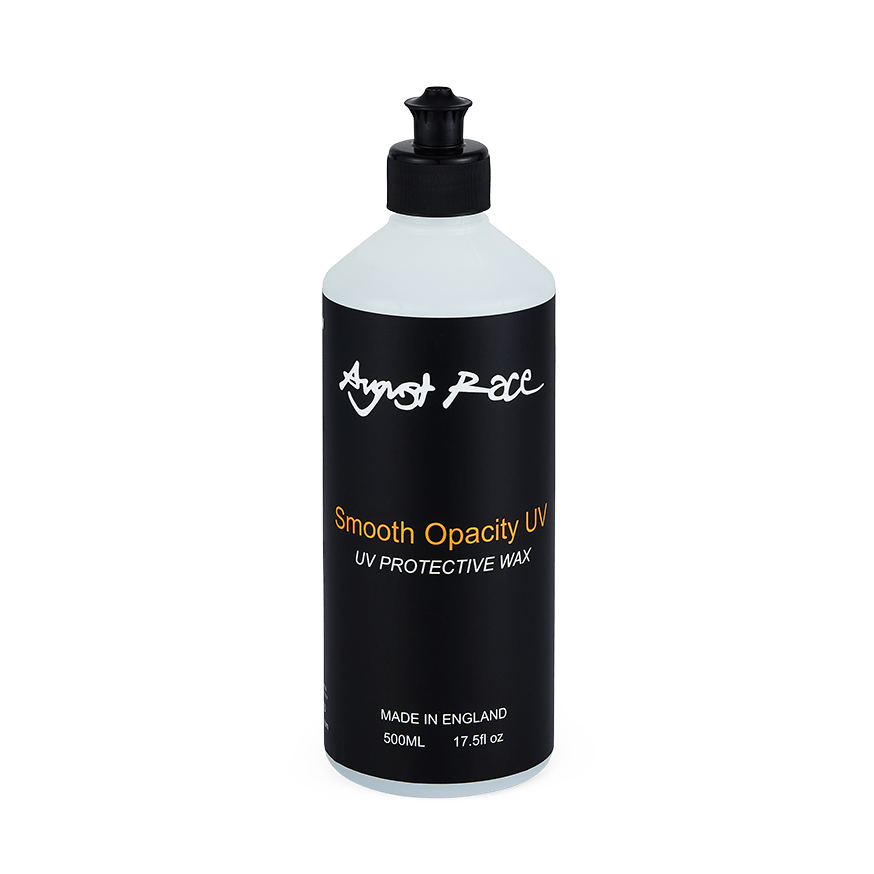
August Race Smooth Opacity UV serves as both finishing polish and UV protection, simplifying the process.
Step-by-Step Oxidation Removal
Step 1: Wash Thoroughly
Never polish a dirty boat. Contaminants scratch the gelcoat during polishing.
- Rinse entire hull with fresh water
- Wash with August Race Boat Wash Pro or marine-grade soap
- Pay attention to waterline, crevices, and rub rail areas
- Rinse from top to bottom
- Dry completely with microfiber towels or allow to air dry
Work in shade and avoid hot surfaces. Direct sun heats the gelcoat, causing products to flash too quickly.
Step 2: Mask and Prep
Protect areas you don't want product on:
- Mask rubber trim, non-skid, and vinyl
- Cover through-hulls and fittings
- Remove loose hardware if practical
- Set up work area with good access
Step 3: Compound (For Moderate-Heavy Oxidation)
Machine Application:
- Apply a line of compound across the face of your cutting pad
- Spread product on a 2x2 foot section at low speed
- Increase to 4,000-5,500 OPM
- Work in overlapping passes
- Keep the pad flat—edge contact causes swirls
- Maintain pad movement to avoid heat buildup
- Wipe residue with clean microfiber
- Inspect before moving to next section
Hand Application:
- Apply compound to foam applicator
- Work in straight, overlapping strokes
- Use consistent, firm pressure
- Cover each section twice
- Wipe and inspect
Signs You're Cutting Through:
- Chalk color on the pad initially
- Pad color clears as you work
- Gloss begins to appear
- Surface feels smoother
Step 4: Polish for Gloss
After compounding, the surface has fine scratches. Polishing removes these and builds depth.
- Switch to a soft foam pad
- Apply thin, even product layer
- Work at 3,500-4,000 OPM (lower speed than compounding)
- Use lighter pressure than compounding
- Work until product breaks down and clears
- Buff to clarity with clean microfiber
August Race Smooth Opacity UV polishes while depositing UV absorbers, combining two steps.
Step 5: Seal for Protection
The most critical step. Without UV protection, your work will fade within weeks.
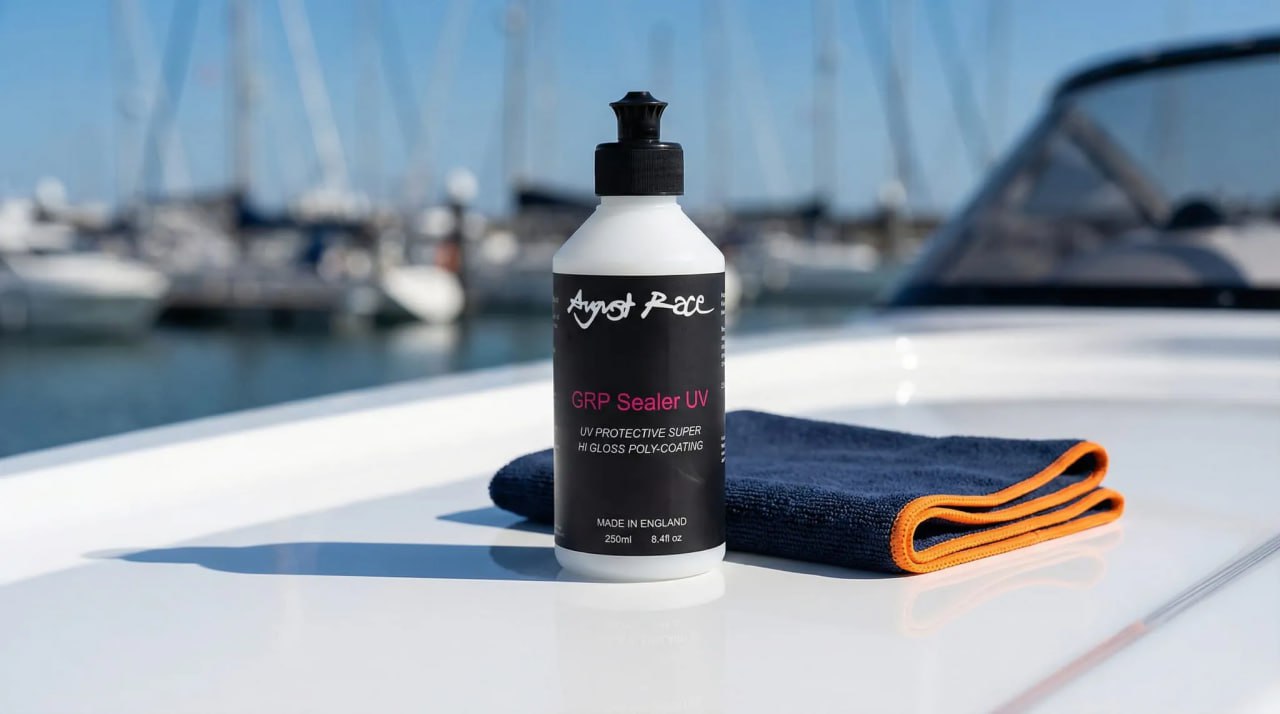
Apply GRP Sealer UV following manufacturer directions:
- Apply thin, even coat with foam applicator or soft pad
- Allow to haze per product instructions
- Buff to clarity
- Apply second coat for maximum protection
- Allow full cure before water exposure
Step 6: Inspect and Touch Up
Walk around the boat at different angles:
- Check for missed spots or uneven gloss
- Touch up as needed
- Photograph results for future comparison
- Note any areas of concern for monitoring
Advanced Techniques
Wet Sanding for Severe Oxidation
When compound alone cannot remove the damaged layer:
- Start with 800-grit wet/dry sandpaper
- Keep surface and paper wet at all times
- Sand in straight, overlapping strokes (not circles)
- Progress through 1000, 1500 grits
- Compound to remove sanding marks
- Polish and seal
Caution: Wet sanding removes gelcoat material. Each pass takes finite thickness. Know when to stop—if you sand through the gelcoat, professional respray is required.
Dealing with Heavy Chalk
For boats with extremely heavy oxidation:
- Pre-treat with an oxidation remover or degreaser
- Rinse thoroughly
- Proceed with compound
- May require multiple compound passes
Spot Correction
For localized oxidation or damage:
- Feather compound outward from the affected area
- Blend edges gradually
- Polish and seal the entire surrounding area
- Avoid hard lines between corrected and uncorrected zones
Maintenance Schedule
| Interval | Action |
|---|---|
| After each use | Rinse with fresh water (especially saltwater) |
| Monthly | Wash with marine soap, check beading |
| Quarterly | Inspect for oxidation, touch up sealer |
| Annually | Full inspection, light polish if needed, full seal |
Common Mistakes to Avoid
Using too much product: Thin, even coats work better than heavy applications. Excess product wastes material and extends work time.
Working in direct sun: Hot surfaces cause products to flash too fast, leaving residue and reducing effectiveness.
Skipping grits: Jumping from heavy compound to final polish leaves scratches. Step through the progression properly.
Neglecting protection: The biggest mistake. Polished gelcoat without sealer will re-oxidize within weeks.
Over-polishing: Gelcoat has finite thickness. Aggressive polishing year after year removes material. Light, targeted correction preserves the surface.
Cost Comparison: DIY vs. Professional Oxidation Removal
| Factor | DIY | Professional |
|---|---|---|
| Products | $50-$150 (compound, polish, sealer, pads) | Included in service |
| Equipment | DA polisher: $100-$200 (one-time purchase) or $40-$60 rental | Included |
| Cost per foot | $2-$5/ft in consumables | $15-$25/ft (light-moderate), $25-$40/ft (severe) |
| 25-foot boat total | $100-$275 | $375-$1,000 |
| Time | 6-12 hours (moderate oxidation) | 4-8 hours (professional crew) |
| Risk | Moderate — can burn through gelcoat | Low — experienced operators |
For boats under 25 feet with light to moderate oxidation, DIY delivers excellent value. For larger boats or severe oxidation requiring wet sanding, professional work is often worth the investment. According to Jamestown Distributors, choosing the right compound for your severity level is the single biggest factor in DIY success — an overly aggressive compound on light oxidation removes more gelcoat than necessary, while a mild polish on heavy oxidation wastes hours.
When to Call a Professional
Some situations exceed DIY capabilities:
- Deep crazing: Spider-web cracks that penetrate beyond the surface
- Osmotic blistering: Bubbles indicating water in the laminate
- Gelcoat failure: Peeling, delamination, or exposed fibers
- Large vessels: 40+ feet becomes impractical for DIY
- Competition or show finish: When perfection is required
Professional costs: $15-40 per foot depending on severity and region.
Frequently Asked Questions
How do I know if my boat has oxidation?
Run your hand across the gelcoat. If white, chalky residue transfers to your skin, that's oxidation. You can also do a water splash test: splash water on the hull, and if the wet area looks noticeably darker and glossier than the surrounding dry surface, oxidation is present.
Can you remove heavy oxidation from a fiberglass boat?
Yes, in most cases. Heavy oxidation (Grade 3-4) requires wet sanding with 800-1500 grit followed by compound and polish. Only when gelcoat has cracked into spider-web patterns (crazing) or you can see exposed fiberglass fibers is the damage beyond DIY restoration.
Does vinegar remove boat oxidation?
Vinegar is a mild acid that can remove surface water stains and light mineral deposits, but it lacks the abrasive cutting action needed to remove actual gelcoat oxidation. You need a rubbing compound or dedicated oxidation remover with abrasive particles to level the degraded surface layer.
How much does it cost to remove oxidation from a boat?
DIY oxidation removal costs $50-$150 in products plus $100-$200 for a DA polisher (one-time investment). Professional services run $15-$25 per foot for light to moderate oxidation and $25-$40 per foot for severe cases. A 25-foot boat typically costs $375-$1,000 professionally.
Can oxidation be too far gone to fix?
Yes. If the gelcoat shows spider-web cracking (crazing), exposed fiberglass weave, or delamination, the surface is structurally compromised and needs professional respray rather than polishing. Heavy chalking alone, even severe chalking, is usually restorable with wet sanding and compounding.
What grit sandpaper for boat oxidation?
For severe oxidation, start with 800-grit wet/dry sandpaper and progress through 1000, 1500, and optionally 2000 grit before switching to compound. Always wet sand — never dry sand gelcoat. Each grit step refines the scratch pattern from the previous grit.
Can I remove boat oxidation by hand without a buffer?
Yes, but expect to spend 3-4 times longer than machine polishing. Hand application works well for light oxidation (Grade 1-2). For moderate to heavy oxidation, a dual-action polisher generates the consistent friction and heat needed to efficiently cut through the degraded layer.
Related Articles
About the Expert

David 'Dock' Thompson
Marina Manager, 20+ Years
David has managed marina operations for over two decades. He's seen every maintenance shortcut and knows which products actually hold up across hundreds of boats.
“I've seen a hundred owners make the same mistake. That's why I write it down.”
Get Expert Tips
Subscribe for marine care insights and product updates from industry professionals.
No spam. Unsubscribe anytime.
You May Also Like
Boat Oxidation Removal: The Complete Guide to Restoring Gelcoat
Everything you need to know about boat oxidation. How it happens, how to assess severity, step-by-step removal methods, and long-term prevention strategies.
Fix Oxidized Gelcoat Fast: A Marina Manager’s Guide
Restore oxidized gelcoat fast at scale. Our marina-tested workflow plus Smooth Opacity UV adds lasting UV protection and cuts rework across multiple boats.
How to Remove Oxidation from Boat: DIY & Professional Methods
Learn how to remove oxidation from your boat with proven DIY methods and professional products. Complete guide covering homemade remedies, compound selection, and UV protection for lasting results.