
What Is Boat Oxidation?
Boat oxidation is the chemical degradation of a fiberglass gelcoat surface caused primarily by ultraviolet radiation from sunlight. UV energy breaks the polymer chains in the gelcoat resin, releasing pigment particles and creating a chalky, faded layer on the hull, deck, or superstructure. Oxidation is progressive, meaning it worsens over time without intervention, but it is fully reversible at every stage except where the gelcoat has worn completely through to bare laminate.
I have managed marina slips for over twenty years, and oxidation is the single most common cosmetic issue I see across every type of boat, from 16-foot aluminum fishing rigs to 50-foot sportfishers. The good news is that boat oxidation removal is straightforward once you understand how far the damage has gone and match the right approach to the severity.
Why Oxidation Matters More Than You Think
Most owners notice oxidation because their boat looks dull. That alone bothers people enough to ask about it at the fuel dock. But the cosmetic issue is the least of the problems oxidation creates.
Resale Value
Boat valuation tools like NADA Guides factor cosmetic condition into their pricing models. A boat with heavy oxidation signals neglect to buyers, and marine surveyors note it in their reports. I have watched owners lose thousands at sale because they skipped a $200 restoration that would have taken a weekend.
Gelcoat Integrity
Gelcoat is not just paint. It is the structural barrier between your fiberglass laminate and the environment. According to West System Epoxy, moisture intrusion through compromised gelcoat is a leading cause of osmotic blistering in fiberglass hulls. Once water reaches the laminate, you are no longer dealing with a cosmetic fix. You are dealing with a structural repair that can cost several thousand dollars.
Progressive Damage
Oxidation accelerates as it progresses. A lightly oxidized surface still has some UV resistance from the remaining resin. A heavily oxidized surface has almost none, so the damage compounds season after season. The earlier you intervene, the less work and cost involved.
How to Assess Oxidation Severity: The 1-5 Scale
Before you buy a single product, you need to know what you are dealing with. I use a five-stage severity scale that I developed after looking at hundreds of boats each season. This tells you which removal method to use and whether you can handle it yourself.
The Water Test
This is the fastest assessment method and it costs nothing. Splash a handful of water on the oxidized surface. If the color darkens noticeably and the surface looks closer to its original shade while wet, you have oxidation. The greater the difference between wet and dry appearance, the more severe the oxidation. If the surface looks the same wet and dry, the problem may be pigment loss rather than surface oxidation, and the approach changes.
Stage 1: Light Haze
The surface has lost its deep gloss but still has some shine. Running your hand across it may leave a faint white residue on your fingers. The water test shows a slight color improvement when wet. This is the easiest stage to address and is common on boats that missed one season of wax.
Stage 2: Noticeable Dullness
The surface is clearly dull compared to protected areas (under grab rails, inside hatches). White chalky residue transfers to your hand with light pressure. The water test shows a moderate color shift. Most boats I see at the marina fall into Stage 2 when owners first ask for advice.
Stage 3: Heavy Chalking
Significant chalk layer on the surface. Running a finger across it leaves a clear white trail. Color is noticeably lighter than original, and the water test shows a dramatic difference. The surface may feel rough to the touch. This is the last stage most DIY boaters can handle with confidence.
Stage 4: Severe Oxidation
The surface is uniformly faded and chalky. Color may be difficult to determine without the water test. The chalky layer is thick, and you can write your name in it with a fingertip. The gelcoat is getting thin. Restoration is still possible but requires wet sanding, which removes additional gelcoat material.
Stage 5: Gelcoat Failure
Patchy areas where the gelcoat has worn through entirely, exposing the underlying fiberglass weave or filler. The surface may have a rough, pitted texture. Some areas may still respond to compounding, but sections with exposed laminate need professional re-gelcoating. I tell owners at this stage to get a professional assessment before spending money on products.
Removal Methods by Severity
Each stage of oxidation calls for a different approach. Here is an overview of what works and when. For detailed step-by-step instructions, including product quantities and technique guidance, see our complete oxidation removal guide.
Light Oxidation (Stage 1-2): One-Step Polish or Cleaner Wax
At these stages, you do not need heavy cutting. A one-step marine polish or cleaner wax applied by hand or with a dual-action polisher will remove the oxidized layer and leave a protected surface in one pass. This is a Saturday afternoon project for most boats under 25 feet.
Start by washing the boat thoroughly with a dedicated marine wash like Boat Wash Pro to remove salt, dirt, and contaminants that would scratch the surface during polishing. Work in 2-foot by 2-foot sections, apply the polish with moderate pressure, and buff off before it hazes.
For a faster approach to light oxidation, see our quick gelcoat fix guide.
Moderate Oxidation (Stage 3): Compound Then Polish
Stage 3 oxidation needs a two-step process. The first pass uses a marine rubbing compound with a cutting pad to break through the chalky layer and reach fresh gelcoat underneath. The second pass uses a finishing polish with a softer pad to remove the haze left by the compound and restore gloss.
This is where a dual-action polisher makes a real difference. You can compound by hand, but it takes three to four times longer and produces less consistent results. A decent dual-action polisher costs $80 to $150 and pays for itself on the first job.
Heavy Oxidation (Stage 4): Wet Sand, Compound, Polish
When compounding alone cannot cut through the oxidized layer, wet sanding is the answer. Using 1000 to 1500 grit wet/dry sandpaper, you physically remove the damaged gelcoat before switching to compound and polish to refine the surface.
Wet sanding removes gelcoat material, so it is not something to do casually. Keep the surface wet at all times, use light even pressure, and sand in straight lines rather than circles. This is a full-day project on a midsized boat, and attention to technique matters.
Our step-by-step removal guide covers wet sanding technique in detail, including how to avoid common pitfalls.
Severe Oxidation (Stage 5): Professional Restoration or Re-Gelcoat
At Stage 5, sections of gelcoat have failed entirely. A professional can assess how much original gelcoat remains and whether targeted wet sanding can save the majority of the surface while patching failed areas, or whether a full re-spray is the more practical option.
Re-gelcoating a boat is a significant expense, typically $50 to $100 per linear foot for a full hull respray. But if the alternative is moisture damage to the laminate, it is the cheaper option in the long run. For boats where fading is the primary concern and the gelcoat is still intact, our faded fiberglass restoration guide covers the full process from assessment to final sealant.
Tools and Materials: What You Need
The right tools depend on your oxidation stage. This quick reference covers the essentials.
| Severity | Materials | Tools | Estimated Cost |
|---|---|---|---|
| Stage 1-2 | Marine wash, one-step polish or cleaner wax, microfiber towels | Applicator pads, optional DA polisher | $30-$80 |
| Stage 3 | Marine wash, rubbing compound, finishing polish, microfiber towels | DA polisher, cutting pad, finishing pad | $80-$150 |
| Stage 4 | Marine wash, 1000-1500 grit wet/dry sandpaper, compound, polish, spray bottle | DA polisher, sanding block, cutting pad, finishing pad | $100-$200 |
| Stage 5 | Same as Stage 4 plus gelcoat repair kit for spot fixes | Same as Stage 4 plus mixing cups, brushes | $150-$300 (DIY portions) |
For all stages: You will also need a UV sealant or marine wax for after the restoration. Do not skip this. Bare restored gelcoat is more vulnerable than oxidized gelcoat because you have just removed the surface layer.
Polisher Selection
A dual-action (DA) polisher is the standard tool for boat oxidation removal. It oscillates rather than spinning in a fixed circle, which makes it far safer than a rotary buffer for anyone who is not a professional detailer. Rotary buffers generate more heat and can burn through gelcoat in seconds if you are not careful. For DIY work, stick with a DA.
Look for a polisher with variable speed control and a 5-inch or 6-inch backing plate. Larger pads cover more area per pass but are harder to control on curved surfaces like hull sides and cabin tops.
DIY vs. Professional: Making the Call
I get asked this question at the marina more than almost anything else. The honest answer depends on three factors: how bad the oxidation is, how much time you have, and whether you enjoy this kind of work.
Cost Comparison
Professional marine detailers typically charge $15 to $40 per linear foot for oxidation removal, depending on severity and your region. For a 25-foot boat with moderate oxidation, expect to pay $400 to $1,000 for a professional compound, polish, and seal.
The DIY approach costs $50 to $200 in materials (compound, polish, pads, sealant) plus $80 to $150 for a DA polisher if you do not already own one. The polisher is a one-time purchase that you will use for years.
When DIY Makes Sense
Stage 1 through 3 oxidation on boats under 30 feet is well within DIY capability for anyone willing to spend a weekend on the project. The techniques are not complicated, and the risk of damaging the surface with a DA polisher is low if you follow basic guidelines.
For budget-conscious approaches, our homemade oxidation remover guide covers effective DIY alternatives and methods.
When to Call a Professional
Hire a professional if you have Stage 4 or 5 oxidation, if the boat is over 35 feet (the labor hours add up fast), or if wet sanding makes you nervous. Wet sanding is not difficult, but it is unforgiving if you lose focus. A professional also makes sense if the boat is headed to market. Buyers and surveyors notice the difference between professional and amateur restoration work.
I have seen owners attempt Stage 4 restoration and end up with swirl marks and uneven surfaces that actually hurt their resale value. If you are not confident, the professional fee is money well spent.
Prevention After Restoration: The Step Most People Skip
This is the section I wish every boat owner would read twice. I cannot count the number of times someone has spent an entire weekend restoring their gelcoat to a mirror finish, then left it unprotected. Within six to eight weeks, the oxidation starts returning. Within a full season, they are back where they started.
Why Immediate Sealing Matters
Freshly compounded gelcoat has zero UV protection. The oxidized layer you just removed was, ironically, providing a small amount of shielding for the gelcoat beneath it. Once you polish down to fresh resin, that surface is fully exposed to UV radiation.
Apply a UV-protective sealant within hours of finishing the restoration. Not tomorrow. Not next weekend. The same day. For a complete guide to UV protection across every boat surface — including reapplication schedules by climate zone — see our UV protection guide.
Sealant Options
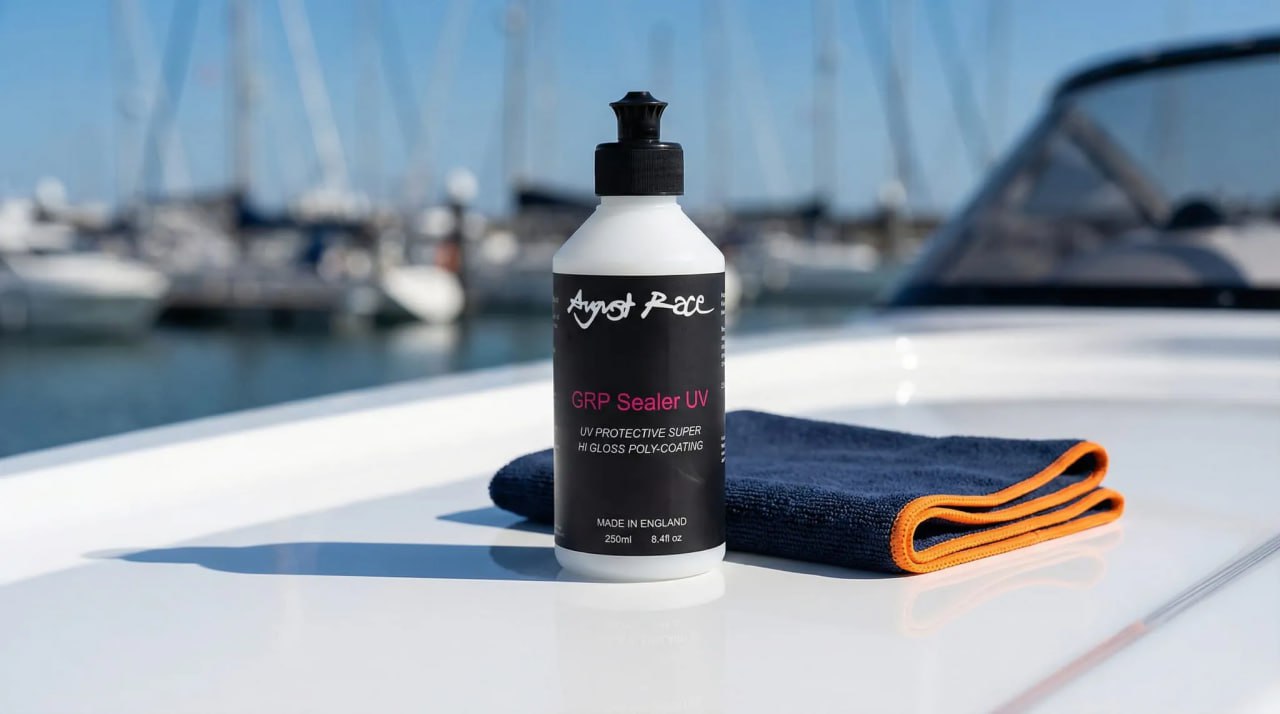
A dedicated UV sealant like GRP Sealer UV bonds to the gelcoat and provides a UV-blocking barrier that typically lasts 3 to 6 months depending on exposure. This is the first line of defense.
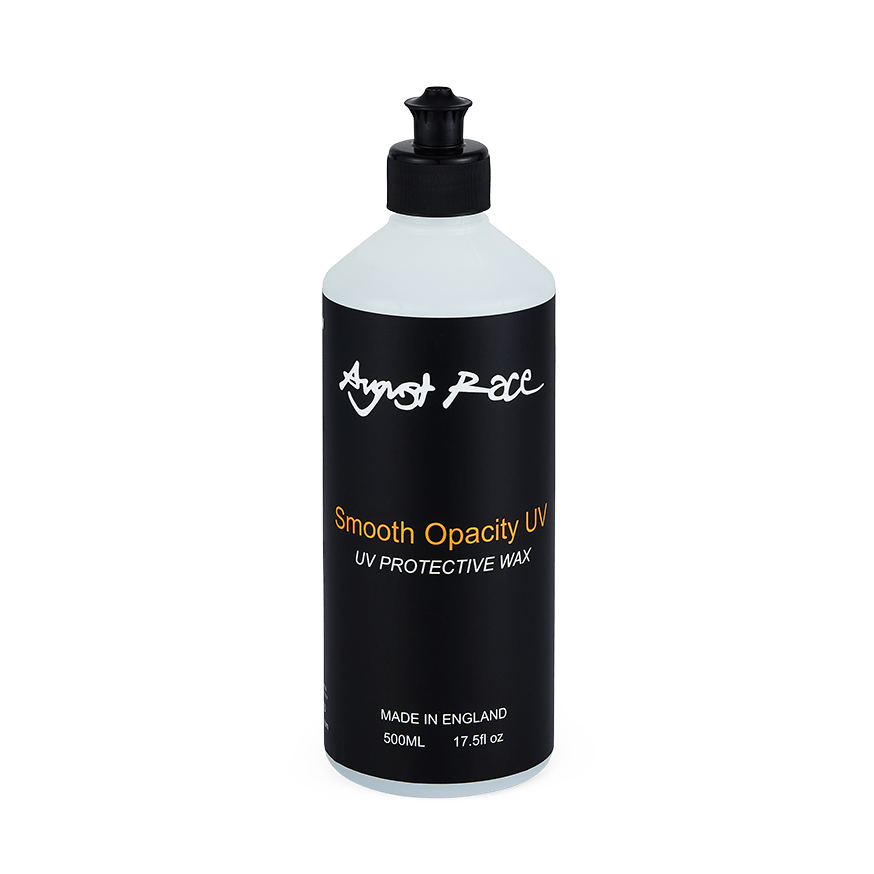
Marine wax, such as Smooth Opacity UV, adds another layer of protection and gives the surface that deep wet gloss owners want. Some owners use sealant alone, some use wax alone, and some layer both. Any of those approaches is better than nothing.
Ongoing Maintenance
Protection is not a one-time application. Marine wax degrades in UV exposure. Sealants break down over time. A maintenance schedule calibrated to your climate and storage situation keeps the gelcoat protected year-round.
Our year-round oxidation prevention guide covers seasonal maintenance schedules for different climates and storage conditions.
Oxidation on Other Materials
Fiberglass gelcoat gets most of the attention, but UV degradation affects other boat materials too. The chemistry and treatment differ from gelcoat restoration.
Aluminum Hulls and Components
Aluminum oxidation is a different chemical process than gelcoat oxidation. Aluminum forms aluminum oxide, a white or gray powdery layer that is actually somewhat protective, unlike gelcoat oxidation. However, heavy aluminum oxidation is unsightly and can become pitting corrosion if neglected.
Aluminum oxidation removal requires acid-based cleaners or specialized aluminum polishes rather than the abrasive compounds used on gelcoat. Applying the wrong product can cause discoloration or etching.
Our aluminum oxidation removal guide covers the specific process, products, and precautions for aluminum hulls and pontoons.
Hypalon Inflatable Tubes
Hypalon is the synthetic rubber used on many rigid inflatable boats (RIBs) and dinghy tubes. UV exposure causes Hypalon to fade, harden, and lose flexibility over time. The restoration process involves specialized UV protectants and conditioners rather than abrasive compounds.
See our Hypalon oxidation restoration guide for the full process on inflatable tubes.
Common Mistakes I See at the Marina
After two decades of watching boat owners tackle oxidation, the same mistakes show up over and over. Avoiding these will save you time, money, and frustration.
1. Skipping the Wash
Polishing over a dirty surface grinds contaminants into the gelcoat, creating scratches that are harder to remove than the oxidation itself. Always wash the boat thoroughly with a proper marine wash before any abrasive step. Dish soap strips wax but does not clean as effectively as a pH-balanced marine formula.
2. Using the Wrong Aggressiveness
Starting with heavy compound on light oxidation is like using a sledgehammer on a finishing nail. You remove more gelcoat than necessary and create more work in the polishing stage. Start with the least aggressive product that might work, and step up only if it is not cutting through.
3. Working in Direct Sunlight
Compounds and polishes dry out rapidly in direct sun, leaving residue that is difficult to remove and can stain the gelcoat. Work in shade or start early in the morning. If you cannot avoid sun exposure, work in very small sections and buff off immediately.
4. Forgetting to Seal After Restoration
I covered this above, but it deserves repeating in this list because it is the single most common mistake. Roughly half the owners I see restore their gelcoat and then fail to apply UV protection the same day. Six weeks later, they are asking why it looks dull again.
5. Applying Too Much Pressure with a Polisher
Let the pad and compound do the cutting. Pressing hard generates excess heat, which can burn through gelcoat (especially on edges and corners where the gelcoat is thinnest). Use moderate, consistent pressure and let the machine work.
6. Ignoring Edges and Corners
Gelcoat is thinnest at edges, rub rails, and sharp corners. These areas burn through first under a polisher. Either avoid them with the machine and do them by hand, or use reduced speed and very light pressure.
7. Expecting One Product to Fix Everything
No single compound or polish handles every oxidation level. A one-step cleaner wax that works perfectly on Stage 1 will barely touch Stage 3. Match the product to the severity, and accept that moderate to heavy oxidation requires multiple steps.
Frequently Asked Questions
What causes oxidation on boats?
UV radiation from sunlight is the primary cause. It breaks down the polymer chains in gelcoat resin, degrading the surface into a chalky powder. Heat amplifies the effect, and salt spray, pollution, and acid rain accelerate the breakdown. Any fiberglass boat stored outdoors without UV protection (wax, sealant, or covered storage) will develop oxidation over time. Boats in southern and tropical climates oxidize faster due to higher UV intensity.
Can you remove heavy oxidation from a boat?
Yes. Even Stage 4 heavy oxidation can be removed through wet sanding followed by compounding and polishing. The process takes more time and effort than lighter oxidation, and it removes a layer of gelcoat material, but the results can be dramatic. The only stage that may not be fully restorable is Stage 5, where the gelcoat has worn through entirely in spots. Those areas need re-gelcoating. For the full process, see our step-by-step oxidation removal guide.
How much does professional oxidation removal cost?
Professional marine detailers typically charge $15 to $40 per linear foot, depending on oxidation severity and your location. A 20-foot boat with moderate oxidation might cost $300 to $600. A 35-foot boat with heavy oxidation could run $800 to $1,400. These prices usually include compound, polish, and a layer of wax or sealant. Get quotes from two to three detailers, and ask specifically what steps their process includes.
Does vinegar remove oxidation from boats?
White vinegar (acetic acid) can dissolve very light surface oxidation and water spots, but it does not contain the abrasive cutting agents needed for moderate or heavy oxidation. Vinegar works on mineral deposits and light haze, not the deep chalky degradation that characterizes true gelcoat oxidation. For anything beyond Stage 1, you need a marine compound or polish with actual cutting ability.
How often should I wax my boat to prevent oxidation?
In most conditions, marine wax needs reapplication every 2 to 4 months. Boats kept outdoors in high-UV environments (Florida, the Gulf Coast, Southern California) may need protection every 6 to 8 weeks. Boats stored under covers or in enclosed slips need less frequent application. The "water bead test" tells you when protection is fading: spray water on the surface, and if it sheets instead of beading, it is time to reapply.
Is oxidation the same as fading?
They are related but distinct. Fading is the loss of color intensity caused by UV destroying pigment molecules in the gelcoat. Oxidation is the physical breakdown of the gelcoat resin itself, producing a chalky surface layer. In practice, fading and oxidation almost always occur together because the same UV exposure causes both. The compounding and polishing process addresses both issues simultaneously by removing the damaged surface layer to reveal intact, pigmented gelcoat underneath.
Can oxidation damage my boat permanently?
Yes, if left untreated for years. Gelcoat is the protective barrier between the fiberglass laminate and water, UV, and contaminants. Once oxidation wears through the gelcoat entirely, moisture can reach the laminate and cause osmotic blistering, delamination, and eventually structural weakening. According to BoatUS, osmotic blistering repair is one of the most expensive maintenance issues fiberglass boat owners face. Addressing oxidation at Stage 1 through 3 prevents permanent damage and costs a fraction of structural repair.
Explore Guides
Complete Guide: How to Remove Oxidation from Boat Gelcoat
Master boat oxidation removal with this complete guide. Learn to identify oxidation severity, choose the right compounds, and protect your gelcoat for lasting results.
Read guideProtect Watercraft from Oxidation: Year-Round Prevention Guide
Learn how to protect your watercraft from oxidation year-round. Seasonal prevention strategies, regional considerations, and professional maintenance schedules for lasting gelcoat protection.
Read guideHow to Remove Oxidation from Boat: DIY & Professional Methods
Learn how to remove oxidation from your boat with proven DIY methods and professional products. Complete guide covering homemade remedies, compound selection, and UV protection for lasting results.
Read guideRestore Faded Fiberglass: GRP Repair Guide
Yes, faded fiberglass (GRP) can often be restored with cleaning, compounding, polishing, and UV sealer. Learn when restoration works and how to protect the finish.
Read guideFix Oxidized Gelcoat Fast: A Marina Manager’s Guide
Restore oxidized gelcoat fast at scale. Our marina-tested workflow plus Smooth Opacity UV adds lasting UV protection and cuts rework across multiple boats.
Read guideRestore Hypalon Oxidation & Carbon Buildup on RIB Tubes
Clear oxidation, carbon, and trailering grime from Hypalon RIB tubes. Steps, safe cleaners, and 2025 prep to prevent inflatable dullness.
Read guideHow to Remove Oxidation from Aluminum Boats: Step-by-Step Guide
Fix white, chalky oxidation on your aluminum boat hull with this step-by-step guide. Covers identification, removal methods, and protection to prevent recurrence.
Read guideAbout the Expert

David 'Dock' Thompson
Marina Manager, 20+ Years
David has managed marina operations for over two decades. He's seen every maintenance shortcut and knows which products actually hold up across hundreds of boats.
“I've seen a hundred owners make the same mistake. That's why I write it down.”
Get Expert Tips
Subscribe for marine care insights and product updates from industry professionals.
No spam. Unsubscribe anytime.
You May Also Like
Complete Guide: How to Remove Oxidation from Boat Gelcoat
Master boat oxidation removal with this complete guide. Learn to identify oxidation severity, choose the right compounds, and protect your gelcoat for lasting results.
Fix Oxidized Gelcoat Fast: A Marina Manager’s Guide
Restore oxidized gelcoat fast at scale. Our marina-tested workflow plus Smooth Opacity UV adds lasting UV protection and cuts rework across multiple boats.
How to Remove Oxidation from Boat: DIY & Professional Methods
Learn how to remove oxidation from your boat with proven DIY methods and professional products. Complete guide covering homemade remedies, compound selection, and UV protection for lasting results.