The best boat wax for oxidation is a hybrid wax-sealant or synthetic polymer sealant that contains UV absorbers and hydrophobic polymers. These products form a sacrificial barrier between UV radiation and gelcoat, preventing the photooxidation that causes chalking, fading, and surface breakdown. Traditional carnauba wax provides short-term gloss but limited UV defense; synthetic and hybrid formulas deliver 3-12 months of measurable protection depending on product type and UV exposure.
Boat Wax Comparison Table: Oxidation Protection by Type
| Wax Type | Durability | Oxidation Removal | Ease of Application | UV Protection | Best For |
|---|---|---|---|---|---|
| Traditional Carnauba | 4-8 weeks | None | Easy (hand) | Low | Show boats, covered storage |
| Synthetic Polymer Sealant | 4-6 months | None | Easy (hand) | High | Harsh UV, low-maintenance owners |
| Hybrid Wax-Sealant | 2-4 months | Light haze only | Easy (hand/machine) | Medium-High | Most boat owners, balanced protection |
| Cleaner-Wax | 4-8 weeks | Light oxidation | Easy (hand) | Low-Medium | Mild oxidation with quick results |
| Ceramic Coating | 1-2 years | None | Difficult (pro recommended) | Very High | High-value vessels, long-term protection |
In Practical Sailor's long-term wax exposure tests, Collinite 845 and 925 paste waxes ranked among the top performers for durability, while 3M products showed strong water beading retention over multiple months of outdoor exposure.
Oxidation destroys more boat gelcoat than any other factor. The right protection product extends your finish for years. The wrong choice has you polishing again within weeks.
Below: what makes boat wax effective against oxidation, product category comparisons, and how to choose based on your boat and maintenance habits.
Understanding UV Protection in Boat Wax
Not all boat waxes protect against oxidation. Many products provide shine without meaningful UV defense.
What Causes Boat Oxidation
UV radiation breaks down the polymer chains in gelcoat. This photooxidation creates free radicals that cause:
- Chain scission (polymer breakdown)
- Crosslink disruption
- Carbonyl formation (chalking)
- Surface degradation
According to Interlux's technical guidance on UV degradation, unprotected gelcoat can begin showing visible oxidation within a single season of full-sun exposure in southern latitudes. Effective protection requires either absorbing UV before it reaches the gelcoat or stabilizing the polymer against radical damage.
Types of UV Protection
| Type | How It Works | Effectiveness |
|---|---|---|
| UV Absorbers | Convert UV to heat | High—actively blocks UV |
| HALS (Hindered Amine Light Stabilizers) | Quench free radicals | High—prevents chain reaction |
| Reflective Particles | Bounce UV away | Moderate—physical barrier |
| Sacrificial Layers | Wax degrades instead of gelcoat | Low—temporary |
Premium marine waxes combine multiple protection types.
Product Categories Compared
Traditional Carnauba Wax
Pros:
- Deep, warm shine
- Natural product
- Easy application
- Affordable
Cons:
- Short lifespan (4-8 weeks)
- Minimal UV protection
- Poor salt resistance
- Frequent reapplication
Best for: Show boats that are covered when not in use, owners who enjoy regular maintenance.
Synthetic Polymer Sealants
Pros:
- Long durability (4-6 months)
- Strong UV protection possible
- Good chemical resistance
- Easy to apply
Cons:
- Some have plastic-like appearance
- May not layer well
- Variable quality across brands
Best for: Boats in harsh UV environments, owners wanting longer intervals between applications.
Hybrid Wax-Sealants
Pros:
- Combines wax shine with sealant durability
- Often includes UV absorbers
- Balanced performance
- Good value
Cons:
- May not excel in any single category
- Quality varies widely
Best for: Most boat owners—good balance of protection, appearance, and maintenance.
Ceramic Coatings
Pros:
- Extreme durability (1-2 years)
- Excellent UV protection
- Superior hardness
- Low maintenance
Cons:
- Professional application often required
- High cost
- Difficult to remove
- Demanding surface prep
Best for: High-value vessels, owners committed to long-term protection.
Key Features to Evaluate
UV Protection Rating
Look for products that specifically mention:
- UV absorbers
- UV stabilizers or blockers
- HALS technology
- SPF-like ratings (rare but useful)
Products that only mention "shine" or "gloss" without UV claims likely offer minimal protection.
Durability
| Environment | Minimum Durability Needed |
|---|---|
| Covered storage | 4-8 weeks |
| Outdoor, shaded | 2-3 months |
| Outdoor, full sun | 3-4 months |
| Tropical/intense UV | 4-6 months |
Don't trust marketing claims alone. Check user reviews for real-world durability.
Hydrophobicity
Water beading serves two purposes:
- Indicates active protection (stops beading = time to reapply)
- Reduces water spot formation
Measure by water contact angle—higher angles mean tighter beads.
Application Ease
Consider:
- Can you apply by hand or is machine required?
- What's the haze/cure time?
- How forgiving is the product (streaking, residue)?
- Single vs. two-stage application
Compatibility
Verify the product works with:
- Gelcoat (most do)
- Painted surfaces (check first)
- Vinyl and rubber (avoid contact or test)
- Your existing products (some conflict)
Product Comparison Table
| Feature | Traditional Wax | Synthetic Sealant | Hybrid | Ceramic |
|---|---|---|---|---|
| UV Protection | Low | High | Medium-High | Very High |
| Durability | 4-8 weeks | 4-6 months | 2-4 months | 1-2 years |
| Gloss Quality | Warm, deep | Bright, reflective | Balanced | High clarity |
| Application | Easy | Easy | Easy | Difficult |
| Cost per Year | $$ | $ | $ | $$$ (initial) |
| Maintenance | High | Low | Medium | Very Low |
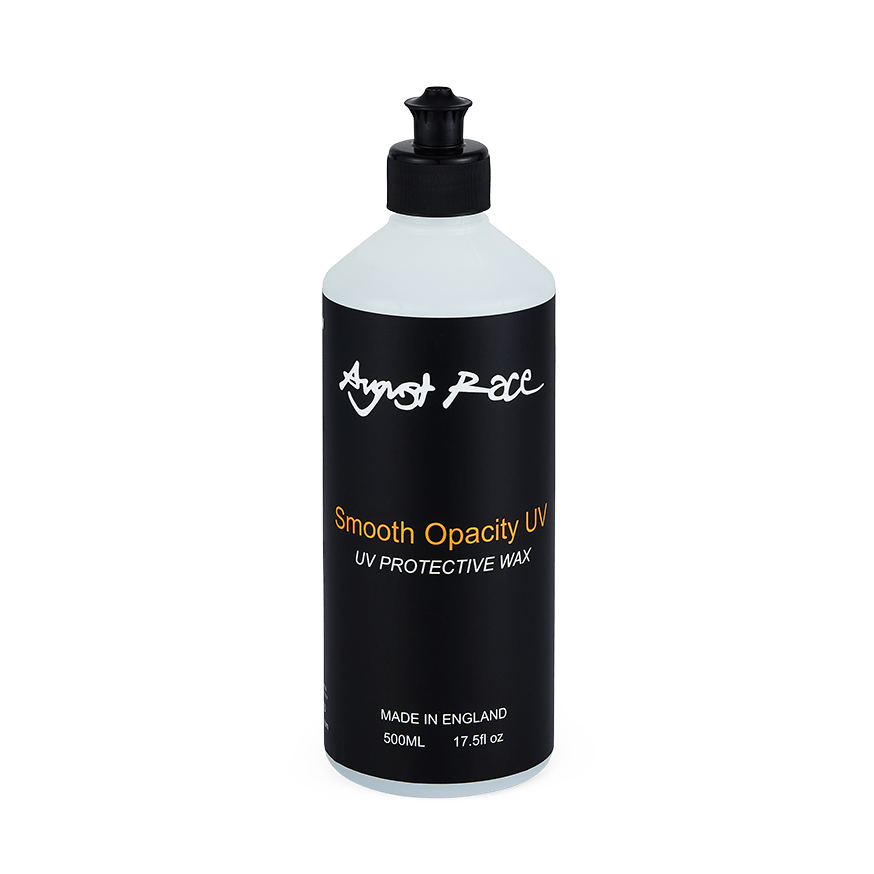
August Race Smooth Opacity UV
Smooth Opacity UV is a hybrid formulated specifically for marine use.
Key Specifications
- Protection Type: UV absorbers + hydrophobic polymers
- Target Surfaces: Gelcoat, marine clearcoat, painted topsides
- Application: Hand or machine
- Expected Durability: 3-4 months under normal UV exposure
- Finish: High gloss with depth
What Sets It Apart
- Dual Function: Acts as finishing polish and protective coating
- UV-Specific Chemistry: Not just shine—active UV blocking
- Hydrophobic Action: High contact angle for water beading
- Marine Focus: Formulated for salt environment, not adapted from automotive
Application Process
- Clean surface with Boat Wash Pro
- Apply thin coat to cool, shaded panel
- Work in overlapping patterns
- Allow to haze (typically 5-10 minutes)
- Buff to clarity with clean microfiber
- Apply second coat for maximum protection
Cleaner-Wax vs. Compound + Wax: Decision Tree
Use a cleaner-wax if: your gelcoat has light haze or dullness, water still beads (weakly), and the surface feels smooth to the touch. A cleaner-wax contains mild abrasives that remove light oxidation while depositing a thin wax layer in one step. This is a maintenance product, not a correction product.
Use compound + polish + wax if: your gelcoat is visibly chalky, feels rough or powdery, water sheets rather than beads, or the color has faded noticeably. According to West Marine's Advisor gelcoat care guide, the proper restoration sequence is a four-step system: wash, compound, polish, and wax. Skipping the compound step on moderate-to-heavy oxidation means the wax bonds to degraded material and fails quickly.
Citable summary: A cleaner-wax handles light gelcoat haze in one step. Moderate to heavy oxidation requires compounding to remove the damaged layer, polishing to restore clarity, and then wax or sealant to protect the corrected surface. Wax applied over uncorrected oxidation will fail within weeks.
How to Choose the Right Product
Decision Framework
Choose Traditional Wax If:
- Boat is covered when stored
- You enjoy regular maintenance
- Budget is tight
- Appearance matters more than protection
Choose Synthetic Sealant If:
- Boat is exposed to intense UV
- You want maximum time between applications
- Protection is priority over warmth of finish
- Professional maintenance is not available
Choose Hybrid (Smooth Opacity UV) If:
- You want balanced protection and appearance
- Quarterly maintenance fits your schedule
- You're correcting light oxidation while protecting
- Value matters—one product, two functions
Choose Ceramic If:
- Vessel value justifies investment
- You want minimal maintenance
- Professional application is accessible
- Long-term ownership is planned
Application Best Practices
Preparation
Wax on oxidized gelcoat is wasted product. Always correct first:
- Wash thoroughly with marine soap
- Compound if oxidation is visible
- Polish to remove compound scratches
- Clean surface before wax application
Environment
- Temperature: 55-85°F (13-29°C)
- Humidity: Below 80%
- Direct Sun: Avoid—work in shade
- Surface Temp: Cool to touch
Technique
Hand Application:
- Use foam applicator pads
- Apply in thin, overlapping passes
- Work one section at a time
- Refresh applicator frequently
Machine Application:
- Soft foam finishing pad
- Low speed (3,000-4,500 OPM)
- Light pressure—let product do the work
- Keep pad moving
Layering
Two thin coats outperform one heavy coat:
- Apply first coat, allow full cure
- Wait 12-24 hours
- Apply second coat
- Allow full cure before water exposure
Maintenance Schedule
| Frequency | Action |
|---|---|
| After each use | Rinse with fresh water |
| Monthly | Wash with marine soap, check beading |
| Quarterly | Inspect and reapply wax to faded areas |
| Every 3-4 months | Full reapplication |
Signs Protection Is Failing
- Water sheets instead of beading
- Surface feels rough or grabby
- Gloss appears dulled
- Cleaning takes longer than usual
Common Mistakes
Applying to dirty surface: Traps contaminants under wax. Always wash first.
Too thick application: Creates streaking, extends cure time, wastes product.
Waxing in sun: Product flashes too fast, leaves residue, reduces effectiveness.
Skipping correction: Wax over oxidation seals in damage and looks worse.
Infrequent reapplication: Protection fails, oxidation returns, you're back to compounding.
Complementary Products
For complete protection, pair your wax with:
- Boat Wash Pro: pH-neutral cleaner that won't strip wax
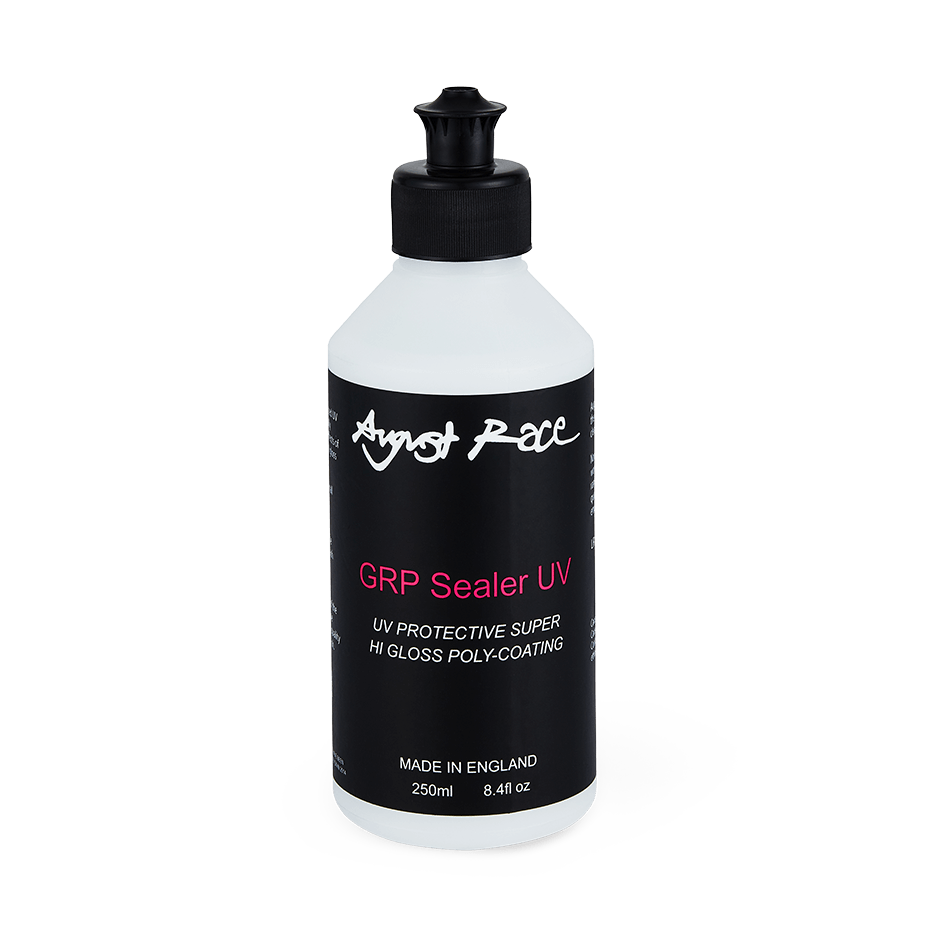
- GRP Sealer UV: Longer-lasting base layer under wax
- Quality microfiber towels: Prevent scratching during buffing
Frequently Asked Questions
What is the best wax for a heavily oxidized boat?
A heavily oxidized boat needs compounding before waxing — wax alone cannot remove oxidation. Use a rubbing compound to cut through the chalky layer, follow with a finishing polish, then seal with a hybrid wax-sealant containing UV absorbers. According to Practical Sailor's multi-year wax test, Collinite 845 and 925 ranked among the top performers for long-term durability, while 3M products showed strong water beading performance in multi-month exposure tests.
Does boat wax remove oxidation?
No. Boat wax protects against future oxidation but cannot remove existing damage. Oxidation is degraded gelcoat that must be physically abraded away with a compound or polish. A cleaner-wax can address very light haze, but moderate to heavy oxidation requires a dedicated compounding step before wax application.
How often should I wax my fiberglass boat?
In high-UV environments like Florida or Southern California, wax every 2-3 months. Moderate climates allow quarterly applications. According to West Marine's gelcoat care guide, a four-step system of wash, compound, polish, and wax keeps fiberglass protected year-round. When water stops beading tightly on the surface, protection has failed and reapplication is needed.
Is carnauba wax or synthetic wax better for boats?
Synthetic polymer sealants outlast carnauba by a wide margin — 4-6 months versus 4-8 weeks. Carnauba delivers a warmer, deeper gloss but degrades quickly in marine UV and salt exposure. Synthetic and hybrid waxes with UV absorbers provide superior oxidation protection. For most boat owners, a hybrid wax-sealant offers the best balance of appearance and durability.
Can you wax over oxidation without polishing first?
You can, but you should not. Wax applied over oxidized gelcoat bonds poorly, looks dull, and traps the degraded material underneath. The wax will fail within weeks. Always correct oxidation with compound and polish before applying wax — the wax then bonds to clean gelcoat and lasts months, not days.
What is the difference between boat polish and boat wax?
Polish is an abrasive product that removes a thin layer of damaged gelcoat to restore gloss and clarity. Wax is a protective coating that shields the polished surface from UV, salt, and water. Polish corrects; wax protects. For oxidized boats, you need both — polish first to remove damage, then wax to prevent it from returning.
How long does marine wax last?
Traditional carnauba wax lasts 4-8 weeks in marine conditions. Synthetic polymer sealants last 4-6 months. Hybrid wax-sealants typically last 2-4 months. Ceramic coatings can last 1-2 years. Practical Sailor's long-term testing found that Collinite paste waxes ranked among the longest-lasting products in their multi-year testing program.
How do I apply boat wax for best oxidation protection?
Apply to clean, cool gelcoat in shade. Use thin, even coats with a foam applicator pad, working in 2-foot square sections. Allow the wax to haze per product directions — usually 5-15 minutes. Buff with a clean microfiber towel, flipping the towel frequently. Two thin coats provide better protection than one heavy coat because the second coat fills any micro-gaps the first coat missed.
Can I wax over existing sealant on my boat?
Most waxes can layer over existing sealant if the sealant is fully cured and the surface is clean. In fact, layering wax over sealant is a common professional technique — the sealant provides the durable base protection while the wax adds gloss and a sacrificial layer. However, removing degraded old sealant before fresh application ensures better bonding. Check product compatibility when layering different brands.
Related Articles
About the Expert

Mike 'Wrench' Wilson
Certified Marine Technician
Mike is a certified marine technician with 18 years in the trade. He's fixed enough expensive damage to know that prevention is always cheaper — and he'll tell you exactly why.
“Every repair I do started as maintenance somebody skipped.”
Get Expert Tips
Subscribe for marine care insights and product updates from industry professionals.
No spam. Unsubscribe anytime.
You May Also Like
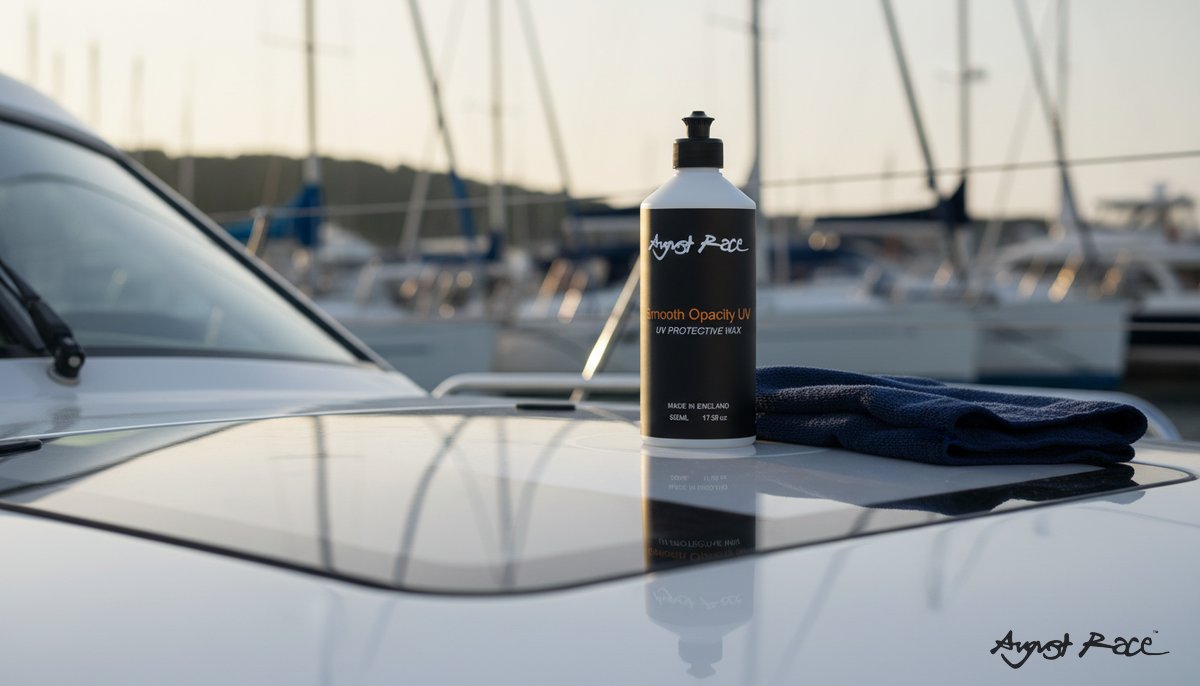
Smooth Opacity UV: Pro UV Protection Boat Wax Guide
A marine tech’s guide to Smooth Opacity UV -- UV protection boat wax and hydrophobic boat polish for gelcoat. Improve gloss, repel water, and extend service...
How to Apply Boat Sealant: Gelcoat Protection Guide
Professional guide to applying gelcoat sealant on fiberglass boats. Covers surface prep, application technique, cure times, and maintenance for lasting UV protection.
Protect Watercraft from Oxidation: Year-Round Prevention Guide
Learn how to protect your watercraft from oxidation year-round. Seasonal prevention strategies, regional considerations, and professional maintenance schedules for lasting gelcoat protection.