
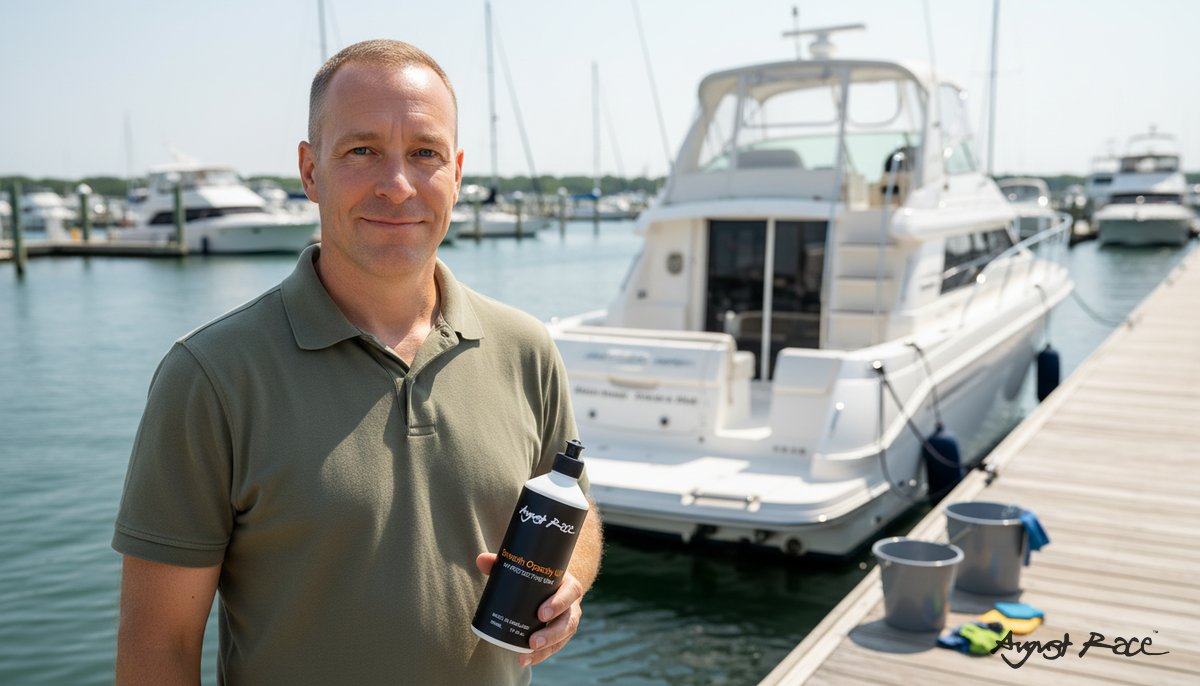
I pulled a 16-foot Tracker out of long-term storage last spring. The owner hadn't touched it in four years. Every surface had that ghostly white haze — thick enough to write your name in with a finger. Took me the better part of a Saturday, but that hull came back to a bright, clean finish. Aluminum oxidation looks bad, but it responds well to the right process.
Here's the full breakdown on aluminum boat oxidation removal: how to identify what you're dealing with, strip the oxidation off safely, and protect the metal so you're not repeating the job next season.
Key takeaways:
- Aluminum oxidation is surface-level and fixable — it's not the same as structural corrosion
- Use the hand test to gauge severity: no residue (light), white powder (moderate), chalk with pitting (severe)
- Never use vinegar, ammonia, bleach, or steel wool on aluminum — all cause permanent damage
- Always seal the hull after restoration; bare polished aluminum re-oxidizes within days
- Freshwater rinse after every outing is the single most effective prevention measure
What Aluminum Oxidation Actually Is
Aluminum doesn't rust like steel. As Discover Boating's hull material guide explains, aluminum forms a thin oxide layer when exposed to air — a natural reaction that actually protects the metal underneath. On a new boat, this layer is invisible.
The problem starts when prolonged UV exposure, salt spray, and environmental pollutants cause that oxide layer to thicken beyond what's useful. The surface turns chalky, dull, and rough. Moisture gets trapped against the metal. Left alone, heavy oxidation leads to pitting, and pitting leads to real structural concerns.
If you've dealt with gelcoat oxidation on fiberglass boats, aluminum oxidation is a different animal. Fiberglass oxidation degrades a coating. Aluminum oxidation degrades the metal itself — slowly, but meaningfully over years of neglect.
Identifying Oxidation on Your Aluminum Hull
The Hand Test
Run your palm along the hull. What comes off tells you where you stand:
- No residue, slight dull sheen: Very early oxidation. A wash and polish will handle it.
- Light white powder on your hand: Moderate oxidation. Needs chemical treatment or mechanical removal.
- Heavy chalk, gritty feel, visible pitting: Severe oxidation. Sanding and aggressive restoration required.
Visual Signs
Look for these across the hull, paying close attention to areas with the most sun exposure:
- Chalky white residue covering large sections
- Dull, flat appearance where the metal once had a satin or polished look
- Rough texture that catches when you drag a fingernail across it
- Uneven discoloration — patches of lighter and darker aluminum
Oxidation vs. Galvanic Corrosion
Surface oxidation and galvanic corrosion require different responses. Oxidation appears as a broad, even haze. Galvanic corrosion shows up as localized pitting, bubbling, or flaking — often near stainless steel fittings, bronze through-hulls, or anywhere dissimilar metals contact the aluminum in the presence of saltwater. If you see localized damage around hardware, that's corrosion, and the fix involves isolating the metals — not just polishing the surface. Galvanic corrosion can cause pitting, flaking, and even hull failure in severe cases — far more serious than cosmetic oxidation.
What Causes Excessive Oxidation on Aluminum Boats?
Understanding the causes helps you target prevention:
- Prolonged UV exposure: Sun breaks down the oxide layer faster than it can re-form as a clean, thin coating. Boats stored uncovered in direct sunlight oxidize significantly faster.
- Salt spray and saltwater immersion: Chloride ions from salt accelerate oxide layer thickening and can initiate pitting, especially on 5xxx and 6xxx series marine alloys.
- Lack of protective sealant: Bare aluminum exposed to the elements has no defense beyond its natural oxide layer. A wax or sealant slows the degradation cycle.
- Age and cumulative weathering: Even well-maintained aluminum boats develop heavier oxidation over time. Annual maintenance keeps it manageable.
- Incompatible cleaning products: Ammonia, chlorine-based cleaners, acidic products like vinegar, and alkaline chemicals all damage aluminum and accelerate oxidation. Steel wool and wire brushes scratch through the protective layer.
Step-by-Step Oxidation Removal
Work in shade or on an overcast day. Hot aluminum surfaces cause cleaning products to dry too fast, leaving residue.
Step 1: Wash the Entire Hull
Start with a thorough wash to remove loose dirt, salt, and debris. You need a clean surface before applying any oxidation treatment.
- Rinse the hull with fresh water from top to bottom
- Mix August Race Boat Wash Pro at 50ml per 10L of water for regular cleaning (100ml per 10L for heavy buildup)
- Wash with a soft sponge or microfiber wash mitt — never use abrasive pads on aluminum
- Pay attention to waterline areas, around fittings, and under rub rails where salt and grime accumulate
- Rinse thoroughly and let the surface dry
Boat Wash Pro is pH-neutral and biodegradable, which matters for aluminum. Acidic or alkaline soaps attack the metal. Lund Boats' aluminum care guide recommends using only pH-neutral products on aluminum at every stage of the cleaning and restoration process.
Step 2: Apply an Aluminum-Specific Oxidation Remover
A dedicated aluminum boat cleaner is needed to cut through the oxidized layer without damaging the base metal. General-purpose oxidation removers formulated for fiberglass may contain chemicals that pit or discolor aluminum.
- Apply the aluminum oxidation remover to a small test area first
- Follow the product's dwell time — usually 3-5 minutes
- Work in 3-4 foot sections to keep the product from drying on the surface
- Agitate gently with a soft brush or non-abrasive pad
- Rinse the section completely before moving to the next
For moderate oxidation, a chemical remover alone may restore the finish. If heavy chalk remains after treatment, move to mechanical removal.
Step 3: Sand Heavily Oxidized Areas (If Needed)
Sanding is only necessary when chemical treatment can't cut through severe buildup or when pitting has roughened the surface.
- Start with 200-400 grit sandpaper on the worst areas
- Work progressively to 600-800 grit as the surface smooths out
- Use wet sanding technique — it produces less dust and prevents the sandpaper from clogging with aluminum particles
- Sand in one direction (following the grain of the metal), not in circles
- Keep the surface wet throughout the process
- Rinse and inspect before moving to a finer grit
Most recreational aluminum boats only need sanding on localized areas — usually the transom and sections below the waterline that see the most wear. Full-hull sanding is rare outside of complete restoration projects.
Step 4: Polish the Surface
Polishing restores the satin or bright finish after oxidation removal or sanding.
- Apply an aluminum-compatible metal polish to a foam applicator pad or soft cloth
- Work in 2-3 foot sections using firm, overlapping strokes
- For machine polishing, use a dual-action polisher at low speed with a soft foam pad — never a wool pad on aluminum
- Buff off residue with a clean microfiber towel before it dries
- Inspect under good light for remaining dull spots and re-treat as needed
Hand polishing works well for smaller boats and touch-ups. For anything over 18 feet, a DA polisher saves hours of labor.
Step 5: Seal and Protect
This step determines how long your work lasts. Polished, bare aluminum begins oxidizing again within days.
- Apply a marine-grade wax or metal sealant formulated for aluminum
- Work in thin, even coats across the hull
- Allow the sealant to haze per the product instructions
- Buff to a smooth, even finish
- Apply a second coat for maximum protection
Marine-grade wax or sealant creates a barrier between the aluminum and the elements. August Race Smooth Opacity UV works on aluminum as well as fiberglass — its pH-neutral formula won't react with the metal, and the UV-protective layer slows the photo-oxidation cycle that started the problem. Without a sealant step, you'll be back doing this same job within a few months. For the full picture on UV protection and sealant options, see our oxidation prevention guide.
Prevention: Keeping Oxidation at Bay
Routine maintenance is easier than restoration. Every time.
After Every Outing
- Freshwater rinse: Especially after saltwater use. Salt residue accelerates oxide buildup. Five minutes with a hose now saves five hours of polishing later.
- Dry hardware and fittings: Standing water in crevices promotes crevice corrosion on aluminum.
Monthly (Saltwater Boats) or Quarterly (Freshwater)
- Wash with a pH-neutral boat soap like Boat Wash Pro
- Inspect for early signs of oxidation, especially on sun-exposed surfaces
- Touch up any areas where sealant has worn thin
Twice Per Season
- Apply a fresh coat of marine wax or aluminum sealant
- Check all dissimilar metal contact points for galvanic corrosion signs
- Inspect the hull for pitting, especially around through-hulls and hardware
Storage
- Store under cover when possible — a carport, boat cover, or enclosed building
- If outdoor storage is your only option, a quality fitted cover makes a measurable difference
- Avoid resting aluminum hulls on bare concrete, which traps moisture against the metal
Routine rinsing is more effective than infrequent intensive treatments. The boats that come through our yard looking the worst are always the ones that sat untouched for entire seasons between cleanings.
What Products Should You Never Use on Aluminum?
This section matters. Wrong products cause real damage:
| Product / Tool | Why It's Harmful |
|---|---|
| Ammonia-based cleaners | Attacks aluminum, causes dark staining |
| Chlorine / bleach | Pits the surface and accelerates corrosion |
| Vinegar or acidic cleaners | Etches and discolors marine alloys |
| Alkaline / caustic chemicals | Dissolves the protective oxide layer too aggressively |
| Steel wool / wire brushes | Embeds steel particles that cause rust spots on aluminum |
| Copper-based antifouling paint | Triggers severe galvanic corrosion |
Stick with aluminum-specific cleaners, pH-neutral soaps, soft sponges, and aluminum-compatible polishes. When in doubt, check the product label for aluminum compatibility.
When Should You Call a Professional?
Some situations go beyond what a wash-and-polish job can fix:
- Deep pitting covering large areas of the hull
- Active galvanic corrosion around fittings or welds
- Weld seam deterioration where oxidation has penetrated joints
- Electrolysis damage from stray electrical currents in the marina
These conditions involve structural integrity, not just cosmetics. A qualified marine surveyor or aluminum boat fabricator should evaluate damage before you apply any surface treatment.
Aluminum Oxidation vs. Fiberglass Oxidation
If you've worked on fiberglass boats, adjusting your approach for aluminum takes some recalibration. Our material care guides cover the differences in detail, but the key points:
| Factor | Aluminum | Fiberglass / Gelcoat |
|---|---|---|
| What oxidizes | The metal itself | The gelcoat coating |
| Natural protection | Forms its own oxide barrier | None — relies entirely on applied products |
| Abrasive risk | Scratches expose fresh metal to accelerated oxidation | Scratches are cosmetic until gelcoat is breached |
| Chemical sensitivity | High — many common cleaners damage aluminum | Moderate — tolerates a wider range of products |
| Sanding approach | Follow the grain, wet sand preferred | Circular or random-orbit patterns work |
For more problem-specific guides across different hull materials, see our problem-solution guide hub.
The Bottom Line on Aluminum Oxidation
Aluminum oxidation is a straightforward fix when you match the approach to the severity. Light oxidation responds to a good wash, a chemical remover, and polish. Heavy oxidation may need sanding. Either way, the final step — sealing the metal — is the one that makes the difference between a one-time job and a recurring headache.
Start with a pH-neutral wash. Use aluminum-safe products at every step. Seal the hull when you're done. Rinse after every trip. That's the entire strategy, and it works.
About the Expert

David 'Dock' Thompson
Marina Manager, 20+ Years
David has managed marina operations for over two decades. He's seen every maintenance shortcut and knows which products actually hold up across hundreds of boats.
“I've seen a hundred owners make the same mistake. That's why I write it down.”
Get Expert Tips
Subscribe for marine care insights and product updates from industry professionals.
No spam. Unsubscribe anytime.
You May Also Like
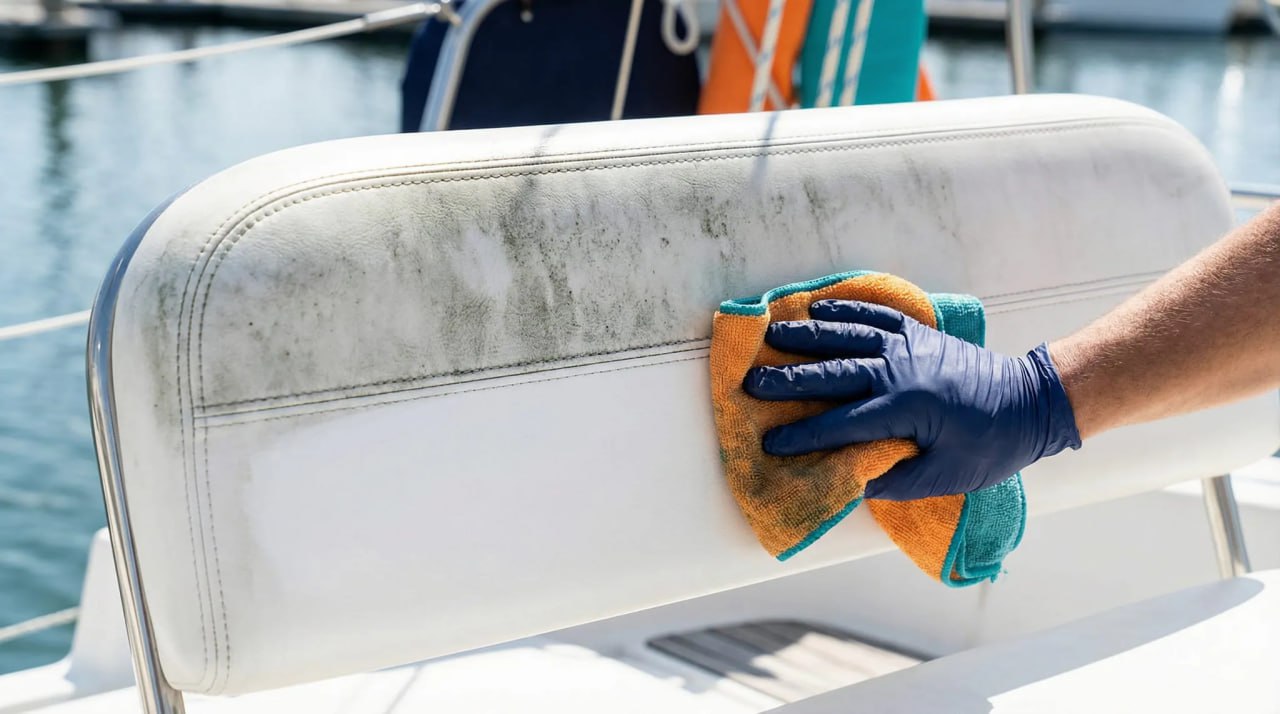
Boat Mildew Prevention: Stop Mold Before It Starts
Prevent and eliminate mildew on every boat surface. Covers vinyl seats, cabin upholstery, canvas covers, enclosed spaces, and storage mold prevention strategies.
Boat Care FAQ: Answers to Common Marine Maintenance Questions
Answers to the most common boat care and marine maintenance questions. Browse by topic to find expert guidance on cleaning, protection, and restoration.
Boat Problem & Solution Guides: Fix Common Marine Issues
Diagnose and fix common boat problems with step-by-step solution guides. Covers oxidation, mildew, UV fading, salt buildup, staining, vinyl cracking, and more.