
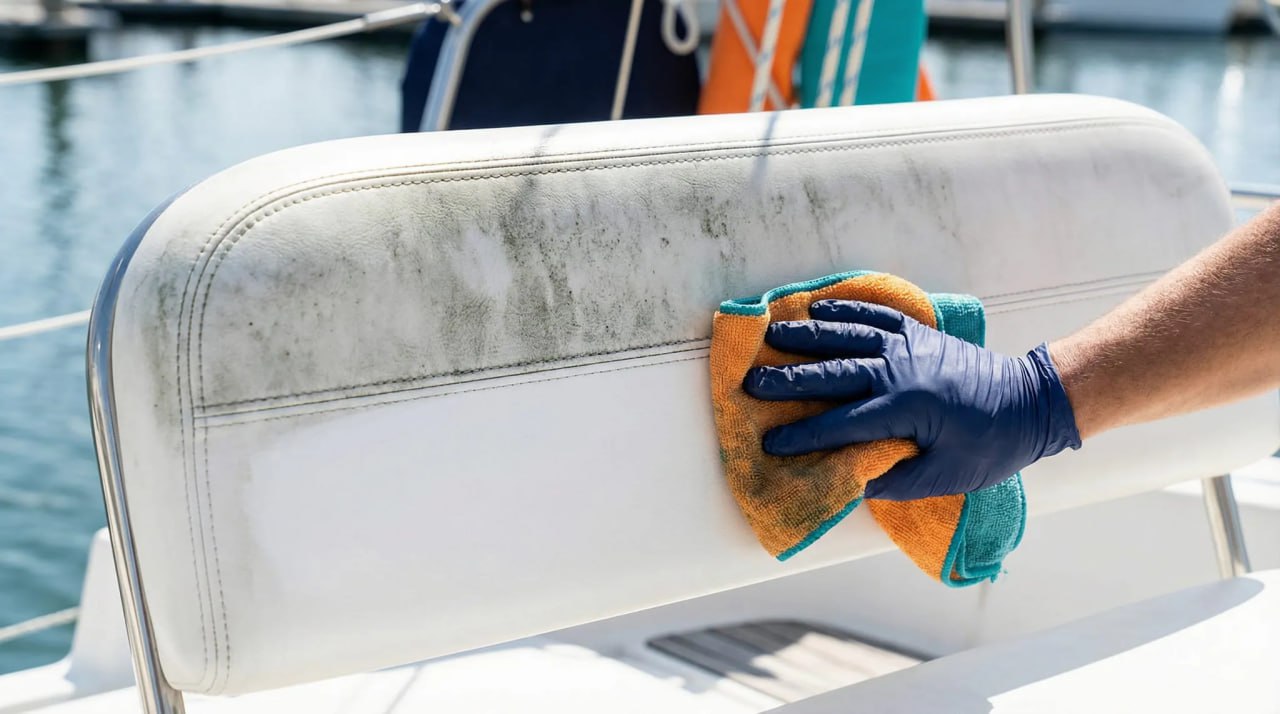
What Mildew Is and Why Boats Are Vulnerable
Mildew is surface fungal growth that colonizes any damp organic material in warm, humid conditions. Boats face a unique combination of factors that make them prime mildew targets: constant exposure to water and humidity, enclosed spaces with limited airflow, organic materials like vinyl and canvas, and extended periods sitting unattended between uses. According to the EPA, mold and mildew grow on virtually any surface when relative humidity exceeds 60% (EPA Mold Course, Ch. 2). Inside a closed-up boat on a summer afternoon, cabin humidity can climb well past 80%.
Understanding the science behind mildew growth gives you a practical advantage. Mildew needs exactly three things: moisture above 60% relative humidity, temperatures between 60 and 80 degrees Fahrenheit, and an organic food source. Eliminate any one of those three factors and growth stops. Every prevention strategy in this guide targets at least one of those conditions.
The financial incentive matters too. Professional marine mold remediation runs $1,000 to $5,000 or more depending on vessel size and severity, with even a basic mold inspection costing $300 to $500 (Mold Man USA). Prevention products cost $15 to $50. That is a 100-to-1 return on prevention versus remediation. And most boat insurance policies exclude mold damage entirely, so remediation comes out of your pocket.
How to Assess Your Boat's Mildew Risk
Before choosing prevention methods, evaluate where your boat falls on the risk spectrum. Some boats and storage situations need aggressive prevention measures. Others need only basic maintenance.
High-Risk Conditions
Your boat faces elevated mildew risk if it meets any of these criteria:
- Stored in humid climates (Gulf Coast, Southeast, Pacific Northwest) where ambient humidity regularly exceeds 70%
- Covered with a non-breathable tarp that traps moisture against surfaces
- Has enclosed cabins or cuddy spaces with limited ventilation openings
- Sits unused for weeks between outings, especially during warm months
- Has existing water intrusion from leaking hatches, windows, or deck fittings
The Five-Minute Inspection
Run this check every time you board after the boat has been sitting:
- Smell test. A musty odor when you open the cabin or lift a seat cushion means active growth, even if you cannot see it yet.
- Touch test. Run your hand across vinyl surfaces. Dampness or a slight tackiness signals conditions favorable to mildew.
- Visual check. Look at seams, stitching, and the undersides of cushions. Mildew often establishes first in areas you do not normally see.
- Airflow check. Are vents clear? Did dorade boxes shift? Is the bilge blower functional? Blocked ventilation is the single fastest path to mildew problems.
- Moisture absorber check. If you use desiccants, check whether they need replacement. A fully saturated absorber does nothing.
The Three Pillars of Mildew Prevention
Effective mildew prevention on boats rests on three pillars: humidity control, surface cleanliness, and protective treatments. You need all three working together. Skipping any one of them leaves an opening for growth to return.
Pillar 1: Humidity Control
Humidity control is the most impactful single factor. Keep relative humidity below 60% and mildew cannot establish, regardless of how many spores are present.
Active measures:
- Solar-powered ventilators (Nicro, Marinco) move air continuously without draining batteries. Install at least one intake and one exhaust vent for cross-flow.
- 12V cabin fans positioned to circulate air across enclosed surfaces. Even gentle airflow prevents the stagnant pockets where mildew thrives.
- Dehumidifiers for boats with shore power. A small compressor dehumidifier set to maintain 50% RH in the cabin solves most mildew problems by itself.
Passive measures:
- Calcium chloride moisture absorbers (DampRid, similar products) in the cabin, head, and under consoles. Replace when fully dissolved, typically every 4 to 6 weeks in humid climates.
- Silica gel packs in lockers, drawers, and electronics compartments. These protect smaller enclosed spaces where calcium chloride containers would be impractical.
- Breathable covers instead of plastic tarps. A quality breathable cover lets moisture vapor escape while keeping rain out. A sealed tarp creates a greenhouse that traps humidity against every surface.
- Propped hatches and cabinet doors during storage. Even a half-inch gap lets moisture-laden air escape rather than condensing on surfaces overnight.
Pillar 2: Surface Cleanliness
Mildew feeds on organic material: body oils, food residue, pollen, bird droppings, and the plasticizers in vinyl itself. Clean surfaces starve potential growth before it starts.
After every outing:
- Wipe down vinyl seats and cushions. Remove food crumbs and drink spills immediately.
- Rinse salt spray from all surfaces with fresh water. Salt deposits are hygroscopic, meaning they attract and hold moisture from the air. That thin salt film becomes a moisture reservoir that feeds mildew. Our salt and algae removal guide covers the process for gelcoat surfaces.
- Stand cushions on edge to air out before closing up. Five minutes of airflow across cushion backs prevents days of trapped moisture.
Monthly deep clean:
- Clean all vinyl surfaces with a marine vinyl cleaner. Vinyl Bright removes mildew staining, restores color, and leaves surfaces clean without residue that feeds future growth. For step-by-step methods, see our vinyl upholstery cleaning guide.
- Clean fenders and accessories that sit against the hull. Fenders develop pink bacterial stains and grime that can transfer to other surfaces. Our fender grime and pink stain removal guide covers this process.
- Inspect and clean canvas covers, bimini tops, and enclosure panels. Canvas traps moisture in its weave and develops mildew quickly if not cleaned.
Pillar 3: Protective Treatments
Clean surfaces resist mildew better than dirty ones, but protective treatments add another layer of defense that extends the time between required cleanings.
Vinyl protection: After cleaning vinyl, applying a protectant creates a barrier that resists moisture absorption and makes future cleaning easier. Vinyl Bright both cleans and restores vinyl in a single application, which simplifies the maintenance process. For a detailed walkthrough, see our boat seat mildew cleaning guide.
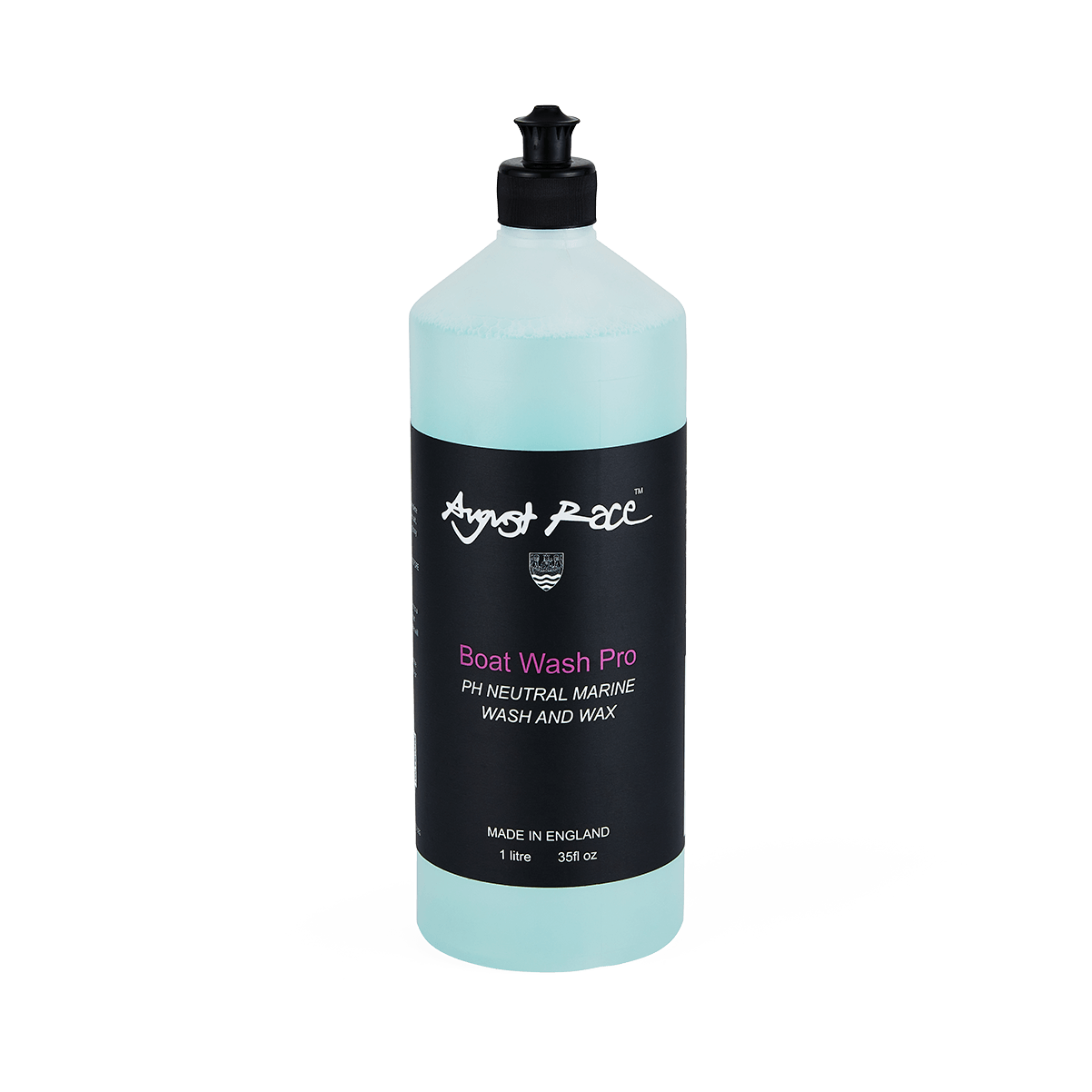
Gelcoat protection: Waxed or sealed gelcoat resists biological growth more effectively than bare gelcoat. A sealed surface is non-porous, leaving nowhere for spores to anchor. A regular wash with a pH-neutral marine wash like Boat Wash Pro removes the organic film that mildew feeds on without stripping existing wax or sealant. If your gelcoat already shows oxidation or chalking, address that first — damaged gelcoat is more porous and gives mildew more surface area to colonize. See our oxidation removal guide for the full process.
For a broader look at UV-protective wax and sealant options across every boat surface — gelcoat, vinyl, tubes, and canvas — see our UV protection guide.
Surface-by-Surface Prevention Guide
Different boat surfaces need different approaches. Here is what works for each.
Vinyl Seats and Cushions
Vinyl is the number one mildew target on most recreational boats. The material itself contains plasticizers that mildew can metabolize, and the seams and stitching trap moisture.
Prevention priorities:
- Keep vinyl dry. Wipe down after exposure to rain, spray, or heavy dew.
- Clean regularly with a dedicated marine vinyl cleaner, not household products.
- Stand cushions on edge when the boat is not in use to allow air circulation underneath.
- Consider cushion risers or spacers that hold cushions slightly off the seat base, creating airflow underneath.
The pink stain problem: Those pink spots on white vinyl are not mold. They are caused by Streptoverticillium reticulum, a dye-producing bacterium that stains the vinyl itself (Professional BoatBuilder). Once the pink dye penetrates the material, it is extremely difficult to remove. Prevention through regular cleaning and keeping vinyl dry is far more effective than remediation.
Canvas and Fabric Covers
Bimini tops, enclosure panels, and boat covers trap moisture in their weave and develop mildew rapidly in humid conditions.
Prevention priorities:
- Rinse canvas with fresh water after salt exposure.
- Allow covers to dry completely before folding or stowing.
- Apply a canvas-specific waterproofing treatment annually.
- Store folded canvas in mesh bags, not sealed plastic containers.
Enclosed Cabins and Cuddy Spaces
Enclosed spaces without active ventilation are mildew incubators. The CDC recommends keeping indoor humidity between 30% and 50% to prevent mold growth (CDC Mold Guide). A closed-up boat cabin in summer can exceed 90% with no intervention.
Prevention priorities:
- Install at least one intake and one exhaust vent for cross-ventilation.
- Place moisture absorbers in the cabin, head, and any enclosed compartment.
- Run a dehumidifier on shore power when possible.
- Leave interior doors, hatches, and locker doors cracked open during storage.
- Remove linens, towels, and clothing when the boat is not in active use. These materials absorb and hold moisture.
Fenders and Dock Accessories
Fenders sit in a perpetually damp zone between hull and dock. They develop bacterial stains and biological growth that can spread to other surfaces.
Prevention priorities:
- Clean fenders periodically with a dedicated fender cleaner. See our fender grime removal guide.
- Rinse fenders with fresh water after each outing in salt water.
- Store fenders in a ventilated locker, not sealed in a bag.
Seasonal Prevention Calendar
Spring Commissioning
- Deep clean all vinyl, canvas, and interior surfaces before the season starts.
- Inspect and replace worn or cracked vent covers.
- Check that all ventilation fans and blowers function.
- Place fresh moisture absorbers throughout the boat.
- Apply vinyl protectant to all seats and cushions.
Summer (Peak Mildew Season)
- Inspect for mildew every two to four weeks (The Boat Galley).
- Wipe down after every outing. Five minutes prevents five hours of cleaning later.
- Replace moisture absorbers as they become saturated, typically every 4 to 6 weeks.
- After rain: open hatches and ventilate as soon as conditions allow.
Fall Winterization
- Thoroughly clean every surface before covering. Mildew that enters winter dormant on a surface will resume growing in spring.
- Apply vinyl protectant as a final barrier treatment.
- Maximize ventilation under covers. Breathable covers with support poles that prevent fabric from resting on surfaces.
- Place double the usual moisture absorbers inside the cabin.
Winter Storage
- Check moisture absorbers monthly. Replace as needed.
- If accessible, ventilate on dry days by opening hatches for an hour.
- Verify covers remain properly supported and water is not pooling.
Common Mistakes That Cause Mildew to Return
Even diligent boat owners sometimes make errors that undermine their prevention efforts. Here are the most frequent mistakes and how to avoid them.
- Covering the boat wet. Closing up a boat with damp surfaces guarantees mildew within days. Always dry surfaces before covering, even if it means waiting an extra hour.
- Using household cleaners on vinyl. Many household cleaners contain ingredients that damage vinyl stitching, strip UV protection, or leave residues that actually feed mildew. Use marine-specific products formulated for the materials on your boat.
- Sealing the boat airtight. Zero airflow means 100% humidity. A perfectly sealed boat is a mildew factory. Always maintain some ventilation, even if it is just cracked hatches.
- Ignoring the underside of cushions. The bottom of seat cushions traps moisture against the seat base. This hidden surface is where mildew often establishes first, then spreads to visible areas.
- Cleaning without addressing the cause. Scrubbing mildew without fixing the humidity, ventilation, or cleanliness issue that caused it means you will be scrubbing again in two weeks.
- Using bleach on vinyl. Bleach degrades vinyl thread and stitching, accelerates UV damage, and can discolor the material. It kills surface mildew but damages the surface you are trying to protect.
When Prevention Is Not Enough
If mildew has already established, shift from prevention to remediation. The approach depends on severity.
Light surface mildew (gray or white patches that wipe off with a damp cloth): Clean with a marine vinyl or surface cleaner, then implement the prevention measures above.
Established growth (dark spots, musty smell, growth in seams or under surfaces): Deep clean with a dedicated mildew remover. Treat all affected surfaces, not just visible spots. Address the underlying moisture source before the next use.
Severe or structural mold (black growth penetrating fabric, wood, or foam cushion cores): This level typically requires professional marine mold remediation. If mold has penetrated cushion foam or cabin wood, surface cleaning will not resolve it.
For detailed step-by-step removal instructions, start with our boat seat mildew cleaning guide for vinyl surfaces or our vinyl upholstery cleaning and mold prevention guide for a comprehensive approach.
Frequently Asked Questions
Why does my boat keep getting mildew even after I clean it?
Recurring mildew means the underlying conditions have not changed. Mold spores are always present in marine air. If you clean the visible growth but do not reduce humidity below 60%, improve airflow, or remove organic nutrients from surfaces, new colonies will establish within days. Prevention requires addressing all three growth factors, not just scrubbing what you can see.
What is the difference between mold and mildew on boats?
Mildew is a surface fungus that appears as flat gray or white patches and can usually be wiped away with a marine cleaner. Mold penetrates deeper into materials, appears in darker green or black colors, and can cause structural damage to fabrics and wood. Both thrive in the same conditions: humidity above 60%, warmth, and organic nutrients.
Is mildew on my boat dangerous to my health?
Yes. The Institute of Medicine found sufficient evidence linking indoor mold exposure to upper respiratory symptoms, coughing, and wheezing in otherwise healthy people, and worsened symptoms in people with asthma. In enclosed boat cabins with poor ventilation, exposure can be concentrated. The CDC recommends controlling moisture to prevent mold growth. Address cabin mold promptly, especially before spending extended time aboard.
Can I use bleach to remove mildew from my boat?
Dilute bleach works on some hard non-porous surfaces, but it damages many boat materials. Bleach degrades vinyl stitching thread, attacks teak deck caulking, can discolor colored gelcoat, and leaves chlorine residue that accelerates UV degradation of fabrics. Marine-specific mildew cleaners are formulated to remove growth without harming the surface underneath.
What is the best way to prevent mildew in a stored boat?
Use a breathable boat cover rather than a sealed plastic tarp. Place calcium chloride or silica gel moisture absorbers in the cabin and under console panels. Clean all surfaces and let them dry completely before covering. Leave cabinet doors, hatches, and storage compartments slightly open to promote air circulation. Check and replace moisture absorbers monthly during storage.
What causes the pink stains on white boat vinyl?
Pink stains on white marine vinyl are not mold. They are caused by a dye-producing bacterium called Streptoverticillium reticulum. This organism produces a pink pigment that penetrates the vinyl itself, making it extremely difficult to remove once set. Prevention through regular cleaning and keeping vinyl dry is far more effective than trying to remove established pink staining.
How often should I clean my boat to prevent mildew?
In humid climates or during summer months, clean and inspect mildew-prone surfaces every two to four weeks. After rain, heavy dew, or any event that introduces moisture to enclosed spaces, wipe down and ventilate as soon as possible. A quick wipe-down after each outing takes five minutes and prevents weeks of remediation work later.
Explore Guides
Boat Seat Mildew: Clean, Restore Vinyl, Prevent Mold
Clean mold from vinyl boat cushions safely, restore color with Vinyl Bright, and prevent stains during rainy season and humid storage.
Read guideBoat Vinyl Upholstery Cleaning: Mold Removal & Prevention
Learn safe, non-abrasive methods for vinyl upholstery cleaning on boats, marine mold removal, vinyl brightening, and mildew prevention with clear steps.
Read guideRemove Fender Grime & Pink Stains | August Race
Pro guide to removing pink tide stains from boat fenders, algae removal, and dockside buildup with August Race Fender Clean. Tips and seasonal care.
Read guideRemove Salt Buildup & Algae: Boat Wash Pro Gelcoat Care
Cut salt, lift algae, and keep gelcoat glossy with August Race Boat Wash Pro -- an easy, streak-free boat cleaning routine for yachts and RIBs.
Read guideAbout the Expert

Maria Chen
Yacht Owner & Marine Biologist
Maria owns a 52-foot Azimut and spent years as a marine biology professor. She brings a scientific eye to boat care — testing, measuring, and only recommending what actually works.
“If you understand the chemistry, the results stop being a mystery.”
Get Expert Tips
Subscribe for marine care insights and product updates from industry professionals.
No spam. Unsubscribe anytime.
You May Also Like
Boat Care FAQ: Answers to Common Marine Maintenance Questions
Answers to the most common boat care and marine maintenance questions. Browse by topic to find expert guidance on cleaning, protection, and restoration.
Boat Problem & Solution Guides: Fix Common Marine Issues
Diagnose and fix common boat problems with step-by-step solution guides. Covers oxidation, mildew, UV fading, salt buildup, staining, vinyl cracking, and more.
How to Remove Oxidation from Aluminum Boats: Step-by-Step Guide
Fix white, chalky oxidation on your aluminum boat hull with this step-by-step guide. Covers identification, removal methods, and protection to prevent recurrence.