
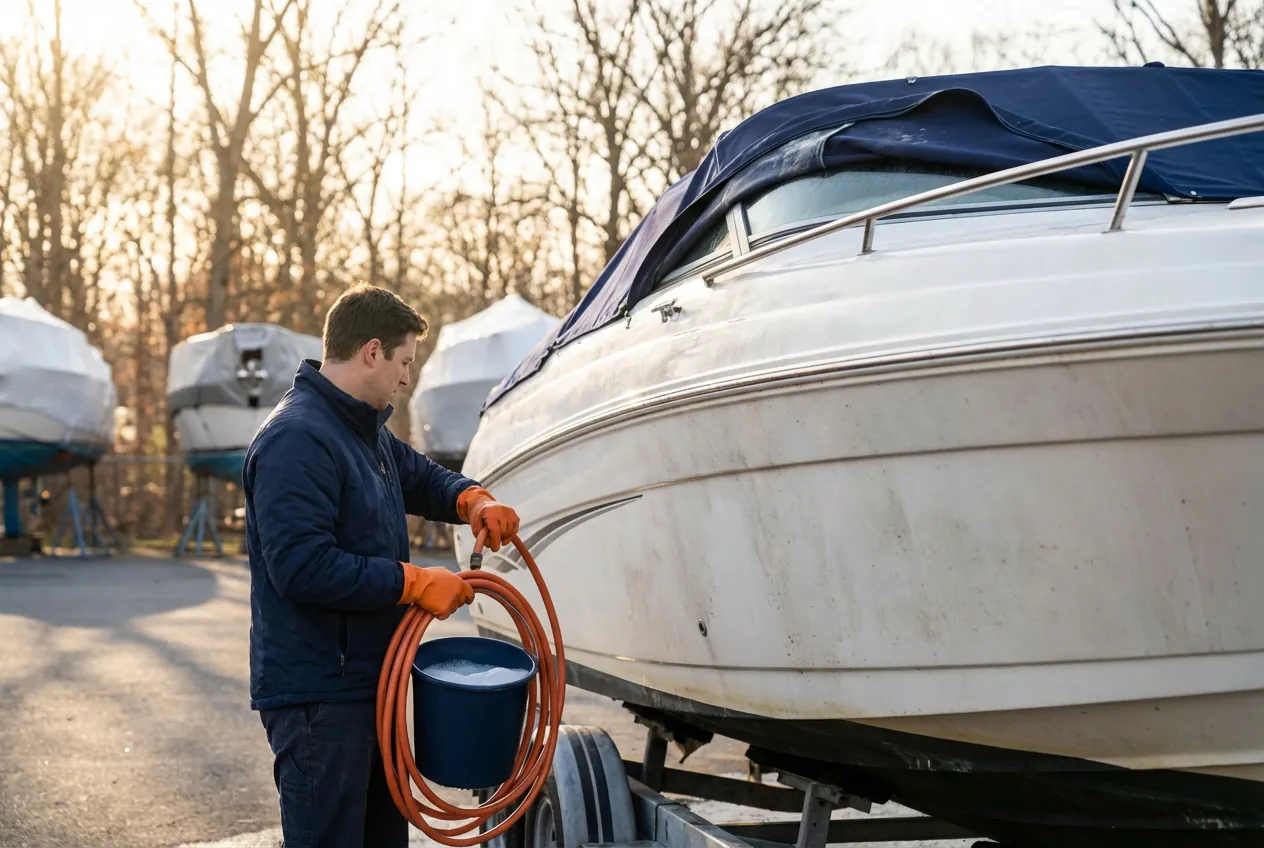
What Is Post-Winter Boat Cleaning?
Cleaning a boat after winter storage is the systematic process of removing mold, mildew, dust, water stains, and debris that accumulate during months of seasonal layup, followed by surface protection to prepare the vessel for launch. According to the BoatUS Spring Commissioning Checklist, cleaning should be the first step in any commissioning workflow because it reveals hidden damage — cracked gelcoat, corroded hardware, rodent intrusion, and mildew infiltration — that mechanical checks alone miss. The EPA's boater's guide to less-toxic cleaning recommends using marine-formulated, less-toxic cleaning products to minimize environmental impact, especially when washing near waterways. A thorough post-winter clean on a 20- to 26-foot boat takes 4 to 6 hours and follows a consistent top-to-bottom, exterior-to-interior sequence. It covers both exterior surfaces (hull, deck, hardware) and interior spaces (cabin, bilge, upholstery). I've managed a 200-slip marina on the Chesapeake for over 20 years, and every February I watch owners pull covers off boats and face the same mess. What they do in the next few hours determines whether that boat launches clean or carries six months of neglect into the water.
This guide walks through the full workflow I recommend to every owner in my yard: exterior first, interior second, top to bottom, bow to stern.
What Should You Expect When You Uncover Your Boat?
Pull that cover or shrink wrap off and take a slow walk around the boat before you touch anything. I tell owners: look first, clean second. Here is what I see every spring across runabouts, center consoles, cruisers, and sailboats alike.
Mold and mildew. Even with good ventilation, trapped moisture breeds mildew on vinyl seats, headliners, and canvas. The gray-green patches are surface mildew. Black spots that have penetrated the material are a bigger problem. Check our mildew prevention guide for long-term solutions.
Dust and pollen. If your boat was stored under a cover rather than shrink wrap, fine dust coats every horizontal surface. Pollen is worse: it bonds to gelcoat and becomes sticky once wet.
Water stains. Pooled water on covers drips through grommets and seams. It leaves mineral deposits on decks and brown tannin rings on the hull at the waterline.
Critter damage. Mice, squirrels, and wasps treat stored boats like condos. Look for chewed wiring, nesting material in lockers and engine compartments, and mud dauber nests on transoms and under gunwales. I once opened a cabin on a 34-foot cruiser and found a family of raccoons had shredded every seat cushion. Check before you start scrubbing: cleaning up after rodents requires gloves, a mask, and disinfectant, not boat soap.
Faded or chalky gelcoat. UV exposure during fall and early winter (before the cover went on) combined with months of stagnant air accelerates oxidation. Run your hand across the hull. If your palm picks up a white chalky residue, the gelcoat needs compound and polish, not just a wash. Our spring gelcoat restoration guide covers every severity level from light haze to heavy chalking.
What Tools and Supplies Do You Need?
Gather everything before you start. Walking back and forth to the truck wastes hours. Here is my standard spring cleaning kit:
| Category | Items |
|---|---|
| Water supply | Garden hose with adjustable nozzle, two 5-gallon buckets, hose-end water filter (if your marina has hard water) |
| Washing | Boat Wash Pro or comparable marine-grade soap, soft-bristle deck brush, wash mitt (microfiber or lambswool), hull mop for topsides |
| Stain removal | Marine-grade acidic hull cleaner for waterline and tannin stains, non-abrasive cleaner for metal hardware, acetone for adhesive residue (use sparingly) |
| Interior | Vinyl Bright or marine vinyl cleaner, mildew remover (non-bleach for colored surfaces), microfiber towels, shop vacuum |
| Protection | Nitrile gloves, knee pads, safety glasses for overhead work, N95 mask for mildew or rodent cleanup |
| Extras | Soft plastic scraper for debris, old toothbrush for hardware crevices, spray bottles, blue painter's tape |
Skip household cleaners. Dish soap strips wax. Bleach damages gelcoat and kills the threads in vinyl stitching. Products designed for marine surfaces save time and prevent damage. West Marine's spring commissioning guide covers additional items if you are doing a full dewinterization alongside the cleaning.
How Do You Clean the Exterior Step by Step?
How Should You Remove the Cover or Shrink Wrap?
Start at the bow and work aft. For shrink wrap, cut along the keel line and peel outward so debris falls away from the deck, not onto it. For fitted covers, two people make this easier: one lifts while the other folds. Shake loose debris off the cover before folding it for storage.
Inspect the cover itself. Small tears become big tears by next fall. Note any needed repairs now while you remember.
What Is the Right Way to Rinse Before Washing?
Rinse the entire boat with fresh water before applying any soap. This removes loose dirt, pollen, and salt residue (if your boat was used in brackish or salt water before storage). Skipping this step means you grind grit into the gelcoat with your wash mitt.
Use a steady stream, not a jet. Start at the top: hardtop or bimini frame, windshield, then deck, then hull sides. Let gravity do the work.
How Do You Wash the Hull and Deck Top to Bottom?
Washing a boat after winter storage follows one rule: work from the top down and from bow to stern. Apply marine boat soap with a soft wash mitt or deck brush in 3- to 4-foot sections. Wash one section, rinse it, then move to the next. Never let soap dry on the surface. Dried soap leaves streaks that bond to oxidized gelcoat and require compound to remove. For topsides, a long-handled hull mop lets you reach from the dock or ground without a ladder. Two-bucket method: one bucket for soapy water, one for rinsing your mitt. This keeps grit out of your wash solution and off the hull. I have watched owners use a single bucket and then wonder why their gelcoat has swirl marks by June. The two-bucket method costs nothing and prevents hundreds of dollars in correction work later.
Use Boat Wash Pro or a comparable pH-neutral marine soap. Automotive car wash soap works in a pinch, but marine formulas are designed for gelcoat and will not strip existing wax as aggressively.
How Do You Remove Waterline Stains?
The waterline catches everything: tannin from leaves, mineral deposits, algae, and scum. Standard soap will not cut it.
Apply a dedicated acidic hull cleaner along the waterline with a sponge. Let it dwell for 2 to 3 minutes (follow the product label). Agitate with a soft brush, then rinse thoroughly. For heavy buildup, a second application may be needed.
Waterline stains fall into two categories: organic and mineral. Organic stains from tannin, algae, and biological growth respond to acidic cleaners with a pH below 5. Mineral stains from calcium, magnesium, and iron in the water require a different chemistry, often oxalic acid-based products. Using the wrong cleaner wastes time and product. Test a small area first. If the stain does not respond to an acidic cleaner within 3 minutes, switch to an oxalic acid formula. According to BoatUS, you should always test in an inconspicuous spot before applying any chemical cleaner to a large area. This advice holds for every cleaning product: gelcoat color, age, and previous treatments all affect how a surface reacts to chemical cleaners. Patience at this stage prevents damage that requires professional correction.
How Should You Clean Metal Hardware?
Stainless steel cleats, rails, and hinges develop water spots and surface rust during storage. Wipe with a non-abrasive metal polish and a microfiber cloth. For aluminum components (common on pontoon boats and tower frames), use an aluminum-specific cleaner: standard metal polish can discolor anodized surfaces.
Chrome hardware is rare on modern boats but shows up on classics. Chrome polish and a soft cloth bring it back. Avoid abrasive pads on any plated surface.
An old toothbrush handles the crevices around hinge pins, cleat bases, and rod holders where grime collects. Five minutes per fitting now prevents corrosion later.
How Do You Clean the Interior After Winter Storage?
Why Should Ventilation Come First?
Open every hatch, port, locker, and door. Let the boat breathe for 30 minutes before you start working inside. Stale air in a closed cabin concentrates mildew spores and off-gassing from cleaning products. If the boat has a cabin, run a battery-powered fan or connect shore power and run the cabin blower.
I had an owner pass out in the cabin of his 32-foot express cruiser because he started spraying mildew remover with every hatch closed on a 78°F day. Fresh air first. Always.
How Do You Check and Clean Vinyl and Upholstery?
Pull seat cushions out and stand them on edge in the sun. Check both sides for mildew. Surface mildew wipes off with a marine vinyl cleaner like Vinyl Bright and a microfiber towel. For a full walkthrough on restoring vinyl, see our vinyl and upholstery cleaning guide.
For mildew that has penetrated the vinyl grain, a dedicated mildew stain remover is needed. If you're dealing with serious winter mildew, our spring vinyl and mildew cleaning guide covers the full removal process. Apply it, let it dwell per the label, and scrub with a soft brush. Rinse and dry in direct sunlight: UV kills residual spores.
Check under cushions for moisture. Damp foam breeds mold inside the cushion where you cannot see it. If a cushion smells musty even after cleaning, the foam needs replacement.
Vinyl upholstery fails more often from improper cleaning than from age. Household cleaners containing bleach, ammonia, or alcohol dry out vinyl plasticizers, causing cracking within one or two seasons. Marine-grade vinyl cleaners are pH-balanced to remove mildew and grime without stripping the protective top coat. After cleaning, a vinyl protectant with UV inhibitors restores flexibility and blocks further sun damage. According to Practical Sailor, vinyl treated with a quality protectant after each cleaning lasts significantly longer than untreated vinyl in equivalent UV exposure, though their testing noted that precise UV-protection claims are difficult to quantify. Skipping the protectant step is the single most common mistake I see boat owners make with their seats, and it turns a $30 cleaning job into a $1,200 reupholstery bill within three years.
How Should You Clean the Bilge?
Pump out any standing water. Spray a marine bilge cleaner on all surfaces. Scrub with a stiff brush, then pump or sponge out the dirty water into a bucket for proper disposal. Never pump bilge cleaner into the marina basin.
While the bilge is open, check hose clamps, through-hull fittings, and the limber holes between compartments. Clear any debris blocking drainage paths.
What About Electronics and Electrical Connections?
Wipe down screens and displays with a damp microfiber cloth. No glass cleaner: ammonia-based products damage anti-glare coatings.
Inspect battery terminals and electrical connections for corrosion. Green or white crusty buildup on terminals means moisture got in. Clean with a terminal brush, apply dielectric grease, and reconnect.
Turn on the electronics and cycle through each system: chartplotter, VHF, depth finder, radar if equipped. Confirm everything powers up before launch day. Finding a dead unit at the ramp is a bad start to the season.
What Mistakes Cause Damage During Spring Cleaning?
Twenty years of watching owners clean boats has given me a catalog of mistakes. These are the ones I see most often.
Pressure washing gelcoat. A pressure washer feels fast and satisfying. It also drives water behind rub rails, into laminate seams, and under non-skid patches. The concentrated stream strips wax and can etch gelcoat. Save the pressure washer for the trailer and dock. Use it on the hull bottom below the waterline if needed, but keep the nozzle 12 inches away with a 40-degree fan tip.
Using household cleaners. Dawn dish soap, Windex, Clorox bleach: I have seen all of them in marina parking lots. Dish soap strips every bit of wax from the gelcoat. Windex damages electronics screens. Bleach weakens vinyl stitching. Marine-specific products exist for a reason.
Scrubbing dry. Scrubbing a dry surface grinds dirt into it. Always wet the surface and apply soap before agitating. This applies to the hull, deck, and vinyl seats.
Ignoring the bilge. If you skip the bilge, you launch with stagnant water, old oil, and whatever debris washed down over the winter. That water circulates through limber holes and contaminates compartments you just cleaned.
Cleaning in direct sun on a hot day. Soap and cleaners dry fast on surfaces above 90°F. Dried product is harder to remove and can leave permanent marks on gelcoat. Clean early morning or late afternoon if you are working outdoors in warm weather.
When Should You Call a Professional Instead of DIY?
| Situation | DIY | Professional |
|---|---|---|
| General wash and rinse | ✓ Straightforward with basic supplies | Not needed unless you lack time |
| Light mildew on vinyl | ✓ Marine vinyl cleaner and elbow grease | Not needed |
| Heavy oxidation or chalky gelcoat | Possible with compound and polisher | Recommended: machine compounding requires experience to avoid burn-through |
| Deep waterline staining (multiple seasons) | Partial improvement with chemical cleaners | Recommended: may need wet sanding |
| Rodent or animal damage | Cleanup is DIY; wiring repair may not be | Required for wiring harness or fuel line damage |
| Teak restoration | ✓ If you have done it before | Recommended for first-timers: over-sanding removes wood fast |
| Bottom paint touch-up | ✓ With proper prep and paint | Recommended if you are unfamiliar with antifouling products |
The dividing line is risk. If a mistake means cosmetic damage you can live with, try it yourself. If a mistake means structural damage, electrical failure, or safety issues, call a detailer or marine technician.
For a full pre-launch plan that goes beyond cleaning into mechanical and safety checks, see our spring boat prep checklist for 2026.
Frequently Asked Questions
Can I pressure wash my boat after winter storage?
You can pressure wash the hull below the waterline, but keep the nozzle at least 12 inches away and use a wide fan tip (40°). Never pressure wash gelcoat above the waterline, painted surfaces, teak, vinyl, or electronics. The concentrated stream strips wax, drives water into laminate seams, and destroys stitching on upholstery.
How long does a full spring cleaning take?
For a 20- to 26-foot boat, expect 4 to 6 hours for a thorough exterior and interior cleaning. Larger vessels (30 feet and up) can take a full day or a weekend if you are working alone. Factor in extra time if you find mildew, rodent damage, or heavy waterline staining.
What is the brown or yellow stain at my waterline?
That stain is typically tannin from leaves and organic debris sitting in standing water against the hull over winter. A marine-grade acidic hull cleaner dissolves tannin stains without heavy scrubbing. Standard boat soap will not remove them.
Should I clean my boat before or after launching?
Always clean before launching. You have better access to the hull, running gear, and through-hulls on land. Cleaning on the hard also keeps contaminants out of the water, which many marinas now require.
What is the best cleaner for a boat after winter storage?
Use a pH-neutral marine boat wash like Boat Wash Pro for general exterior cleaning. For waterline stains, an acidic hull cleaner targets tannin and mineral deposits. For interior vinyl and mildew, a dedicated marine vinyl cleaner like Vinyl Bright removes organic staining without damaging plasticizers. Avoid dish soap and household cleaners, which strip wax and damage gelcoat.
How do I check for rodent damage on my boat?
Inspect the engine compartment for chewed wiring, shredded insulation, and nesting material. Check fuel lines for gnaw marks. Open every locker and look for droppings, nesting debris, or chewed hoses. Rodent urine contains pathogens, so wear gloves and an N95 mask during inspection and use a disinfectant spray before cleanup.
How do I remove water stains from my boat after storage?
Water stains are typically mineral deposits or tannin from organic debris. Mineral stains respond to oxalic acid-based cleaners; tannin stains need an acidic hull cleaner with a pH below 5. Apply, let dwell 2-3 minutes, agitate with a soft brush, and rinse. Test in a small area first.
About the Expert

David 'Dock' Thompson
Marina Manager, 20+ Years
David has managed marina operations for over two decades. He's seen every maintenance shortcut and knows which products actually hold up across hundreds of boats.
“I've seen a hundred owners make the same mistake. That's why I write it down.”
Get Expert Tips
Subscribe for marine care insights and product updates from industry professionals.
No spam. Unsubscribe anytime.
You May Also Like
Spring Boat Prep Checklist: The Complete Detailing Guide for Launch Season 2026
Step-by-step spring boat prep: hull cleaning, oxidation removal, sealant application, vinyl care, and final inspection. Get your boat launch-ready for 2026.
Spring Boat Waxing Guide: Protect Your Hull Before Launch Season
A professional detailer's step-by-step guide to spring boat waxing, covering surface prep, application technique, coat strategy, and when to upgrade to sealant or ceramic protection.
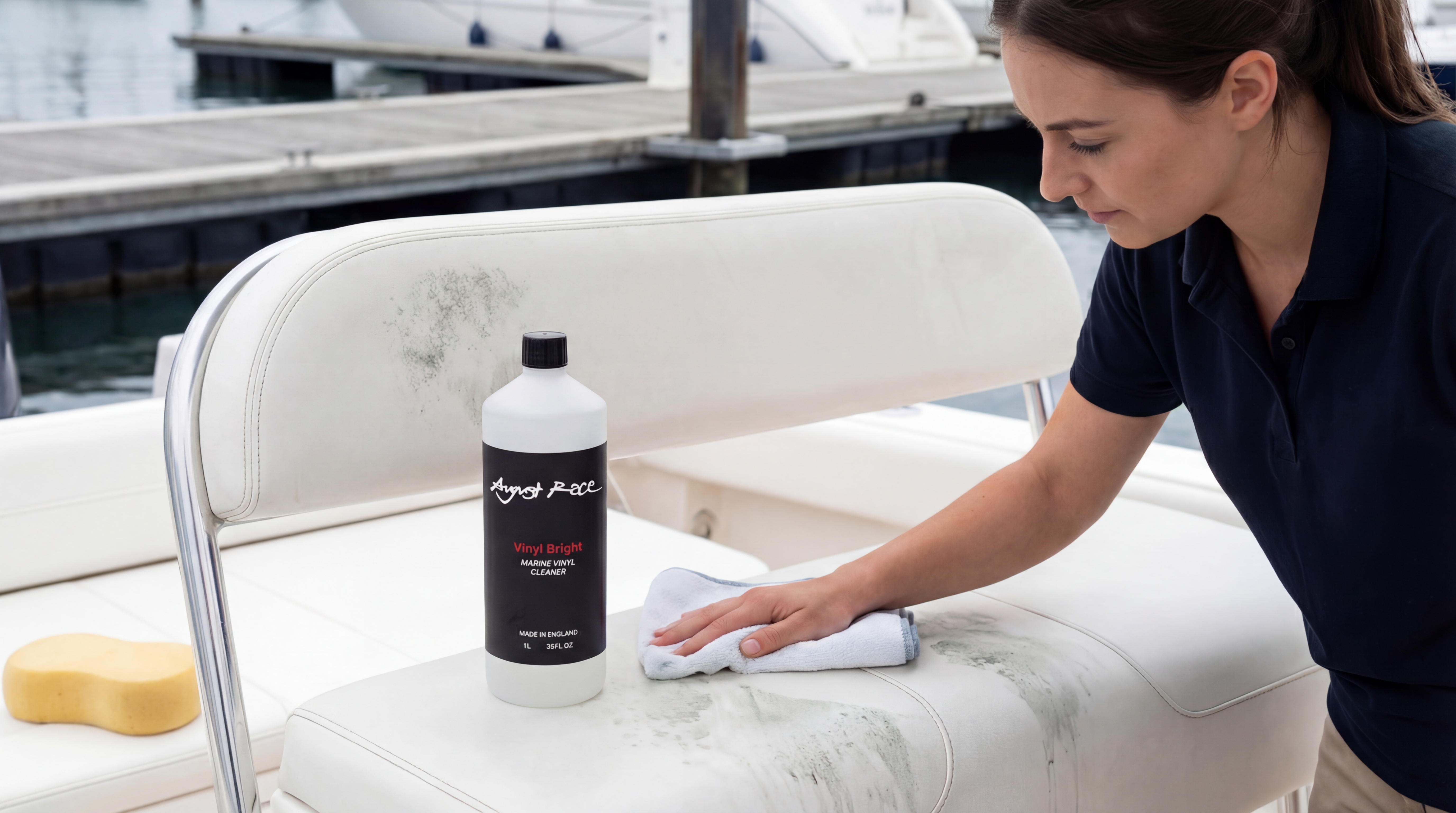
Spring Vinyl and Upholstery Cleaning: How to Remove Winter Mildew from Boat Seats
A professional detailer's step-by-step guide to removing winter mildew from marine vinyl seats, protecting upholstery after cleaning, and preventing mildew from returning next season.